
The art of illusion and the world of artistic tattooing have much more in common than meets the eye. Both of these disciplines are built on visual perception, skillful hands, and the ability to surprise others, creating images that remain in memory forever. For a professional illusionist, body art is not just decoration, but a way to declare their belonging to an ancient and mysterious craft. By choosing a specific design, a master of magic imbues it with deep meaning, reflecting their philosophy, performance style, and even professional secrets. In this article, we will delve into the meaning of tattoos for magicians and explore the most popular symbols in this unique environment.
The Magic of Illusions: Why Magicians Choose Tattoos

For a modern illusionist, a tattoo often becomes part of their stage persona. In a world where visual presentation plays a key role, a design on the skin can serve as an excellent tool to attract attention or, conversely, to misdirect the viewer’s gaze. You understand that a magician’s hands are their primary instrument, and it is they that most often become the canvas for significant imagery. Tattoos on the hands or forearms emphasize the fluidity of movements and create an aura of mystery around the performer. Furthermore, for many magicians, a tattoo is a kind of protective charm or a tribute to great predecessors like Harry Houdini or Jean-Eugène Robert-Houdin. It’s a way to immortalize their passion for the impossible in a permanent form that won’t disappear when the curtain closes.
A History of Tattoos in the World of Illusions: From Ancient Signs to Modern Symbols

If we look back at history, we see that the connection between magic and tattoos dates back to ancient times. In ancient cultures, shamans and sorcerers often covered their bodies with symbols believed to bestow supernatural abilities. During the heyday of traveling circuses and “freak shows” in the 19th and early 20th centuries, tattooed individuals were themselves part of the magical spectacle. Later, as illusion evolved into a distinct elite art form, magicians began using tattoos as secret marks of distinction. In closed societies of illusionists, certain symbols could indicate a level of mastery or proficiency in a specific genre—such as card manipulation or escapology (the art of escape). Today, this tradition has transformed into a powerful layer of visual culture, where each design carries a coded message about the nature of reality and deception.
Key Symbols of Magic Tricks: What Popular Tattoos Mean for Magicians

The symbolism in the world of magic is incredibly rich. Every object used on stage has its esoteric and professional significance. Let’s examine the most popular designs chosen by illusion masters.
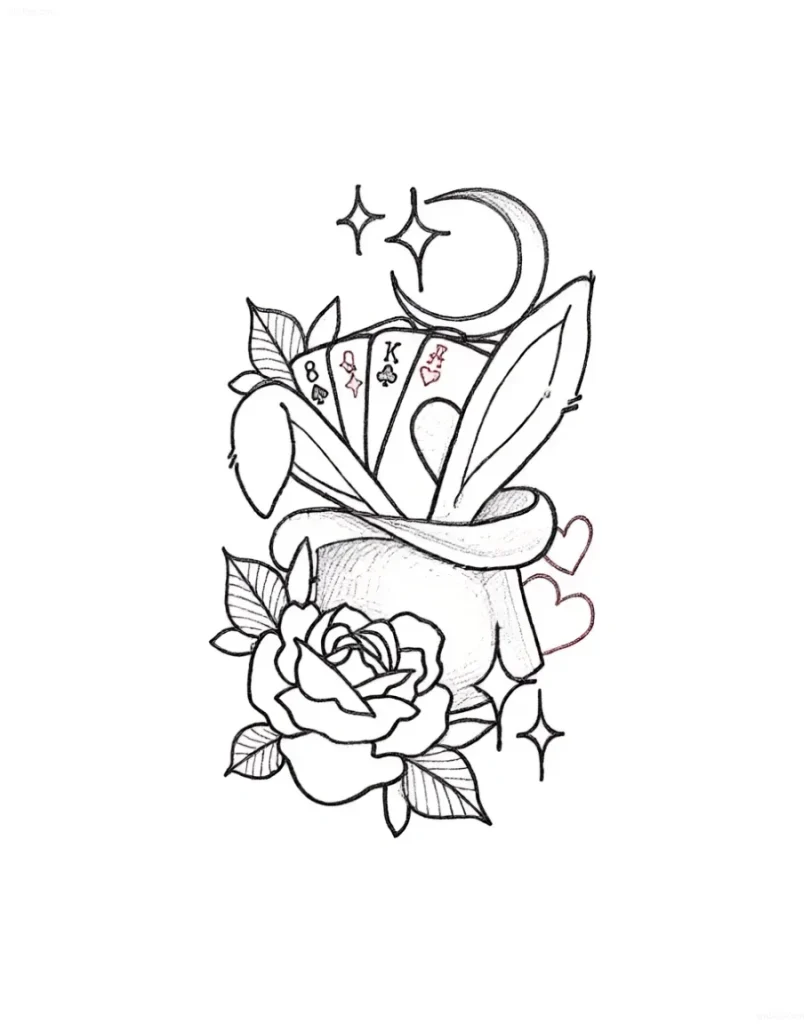
- Playing Cards: This is perhaps the most recognizable symbol. However, the meaning of a tattoo for a magician here goes deeper than just a love for gambling. The Ace of Spades is often interpreted as a symbol of transformation and ultimate mastery. The Joker represents unpredictability, chaos, and the magician themselves, who stands outside the rules. A specific card combination (e.g., “dead man’s hand” or a royal flush) can signify a personal story or a favorite trick of the performer.
- Rabbit in a Hat: A classic of the genre, symbolizing the appearance of something from nothing. It’s a sign of adherence to tradition and a symbol that the impossible becomes possible in the hands of the master. In a deeper sense, it represents the fertility of ideas and boundless imagination.
- Broken Chains and Locks: A favorite motif for escapists. Such tattoos symbolize inner freedom, the ability to overcome any obstacles, and to break free from the shackles of the mundane. This is a direct reference to Houdini’s legacy.
- Magic Wand or Wand: A symbol of willpower concentration and energy direction. In a tattoo, it signifies power over circumstances and the ability to alter reality at will.
- Dove: A symbol of peace, but in the context of magic, it signifies disappearance and sudden reappearance, a symbol of the soul and the purity of trick execution.
- Hourglass: A reminder of the importance of timing. For an illusionist, a second can decide everything: whether the trick will be successful or the secret will be revealed. It is a symbol of control over time.
Tattoo Styles for Magicians: From Realism to Abstraction

The choice of tattoo style is as important as the symbol itself. Illusionists often opt for styles that emphasize the mystical essence of their work.
- Realism: Ideal for portraits of great magicians or detailed depictions of props. A well-executed card or coin in hyperrealism itself looks like a miracle on the skin.
- Old School: A classic style with bold outlines and bright colors. It’s perfect for depicting traditional symbols: daggers piercing hearts, swallows with cards in their beaks, and classic top hats. It’s a tribute to the “golden age” of magic.
- Engraving and Dotwork: These styles evoke the feel of ancient grimoires and alchemical treatises. Such tattoos look like illustrations from secret knowledge, which is very close to the spirit of serious magic.
- Minimalism: Magicians often choose tiny symbols on their fingertips—card suits or mathematical signs. This looks stylish and doesn’t distract the audience during manipulation, while still remaining an important personal symbol.
The Ideal Location for a Magician’s Tattoo: Revealing Placement Secrets

The placement of a tattoo for a performer of an original genre is strategically important. Hands (wrists, forearms) are the most popular area. During a performance, hands are constantly in motion and at the center of attention. A tattoo here can serve as an “anchor” for the viewer’s gaze. Behind the ear is an excellent spot for a small symbol (e.g., a coin), which ironically plays on the classic trick of producing a coin from behind the ear. The chest and back are usually used for large, conceptual works that are hidden under the stage costume and serve as a personal amulet for the performer, concealed from the public’s eyes, just like the secret of the trick itself.
Advice for Aspiring Magicians: How to Choose and Care for a Magician’s Tattoo

If you decide to dedicate your life to illusion and solidify it with a tattoo, heed the advice of experts. Firstly, choose a design that will remain relevant for years to come. Magic is classic, so the symbols should be timeless. Secondly, carefully select your artist; the detailing of cards or mechanisms requires precision. Thirdly, remember the healing process. If your performances involve active hand manipulation, schedule your session so that you have at least two weeks for complete skin recovery without excessive strain. Use high-quality healing ointments and avoid direct sunlight to keep the colors as vibrant as your shows.
Frequently Asked Questions About Tattoos for Magicians

Below, we have compiled answers to the most common questions from those interested in this topic.
Does a tattoo distract the audience from the trick itself? Professionals use tattoos for misdirection, making them part of the performance. Which cards do magicians most often get tattooed? The undisputed leaders are the Ace of Spades and the Joker, less often the Queen of Hearts or the King.
| Question | Answer |
|---|---|
| Can a tattoo help in performing a trick? | Yes, there are “tattoo gadgets” where predictions (e.g., a card) are incorporated into the design, which are revealed at the end of the trick. |
Interesting Facts About Tattoos and the World of Illusions

- Many famous illusionists, such as Criss Angel, use their tattoos as a full part of their “rockstar of magic” image, which helps them attract a younger audience.
- There is a legend that some old masters tattooed microscopic dots on their palms to help them accurately count the number of cards in a deck by touch.
- In some closed magical communities, there is a tradition of getting a small tattoo after mastering a certain complex level of manipulation.
- A tattoo of the “All-Seeing Eye” is often found on mentalists as a symbol of their ability to “see” the thoughts of those around them.
In conclusion, the meaning of a tattoo for a magician is a complex blend of professional pride, personal philosophy, and the aesthetics of mystery. Every line on an illusionist’s skin is an extension of their art, another enigma for the audience to unravel, or a secret that will forever remain hidden beneath the veil of ink and skill.