Among the variety of marine and freshwater inhabitants that have become canonical subjects in tattoo art (such as Koi Carp, sharks, or octopuses), the aquarium fish Angelfish (Latin: Pterophyllum) holds a special place. This tattoo, at first glance, seems to be an exclusively aesthetic choice. However, behind its elegant, seemingly floating forms, lies a deep and multi-layered symbolism associated with inner harmony, spiritual purity, and aristocratic grace.
Angelfish Tattoo: An Overview of Meaning and Symbolism
The Angelfish, known for its characteristic triangular or rhomboid outline and long, veil-like fins, is one of the most recognizable representatives of the aquarium world. In the context of body art, it serves not just as a decorative element but as a powerful symbol reflecting a person’s inner state, their pursuit of beauty, and balance.

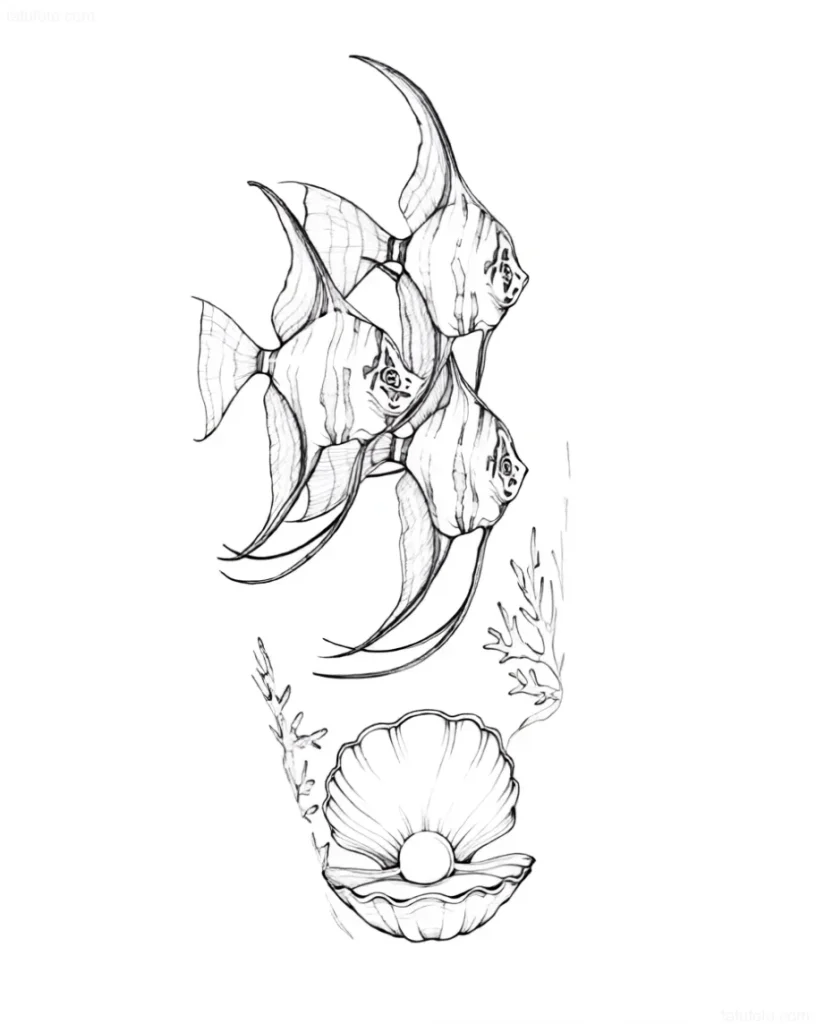

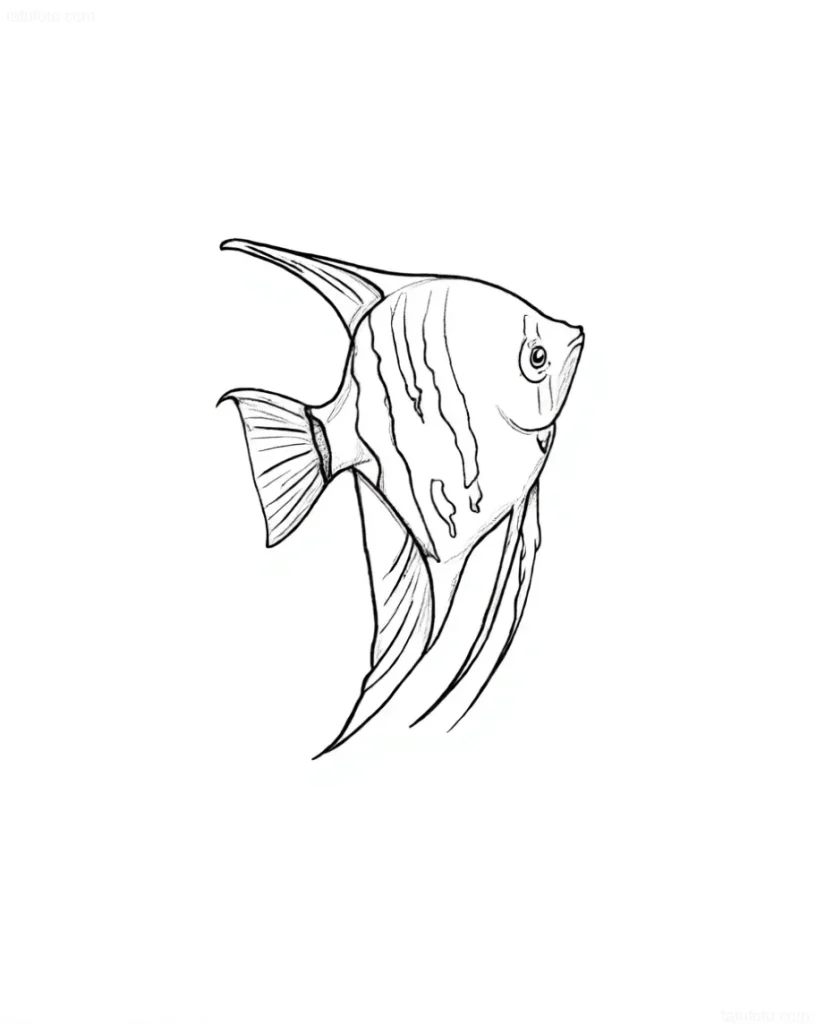
By choosing an Angelfish tattoo, you are primarily declaring your commitment to aesthetics and refinement. Unlike aggressive or straightforward marine symbols, the Angelfish conveys gentle strength and elegance. Its symbolism can be divided into several key areas:
- Grace and Movement: The Angelfish’s fins, resembling wings, create a sense of flight, which is often interpreted as a symbol of freedom, lightness of being, and overcoming earthly limitations.
- Balance and Harmony: Due to the perfect symmetry of its body, the Angelfish embodies the balance between the external and internal worlds, between intuition and logic.
- Spiritual Purity: As an inhabitant of clear waters (aquariums), it is often associated with purity of intentions, innocence, and the pursuit of ideals.
- Uniqueness and Isolation: Angelfish are fish that require special care and attention. In a tattoo, this can indicate the uniqueness of a personality, their selectivity in their environment, or the need for personal, protected space.
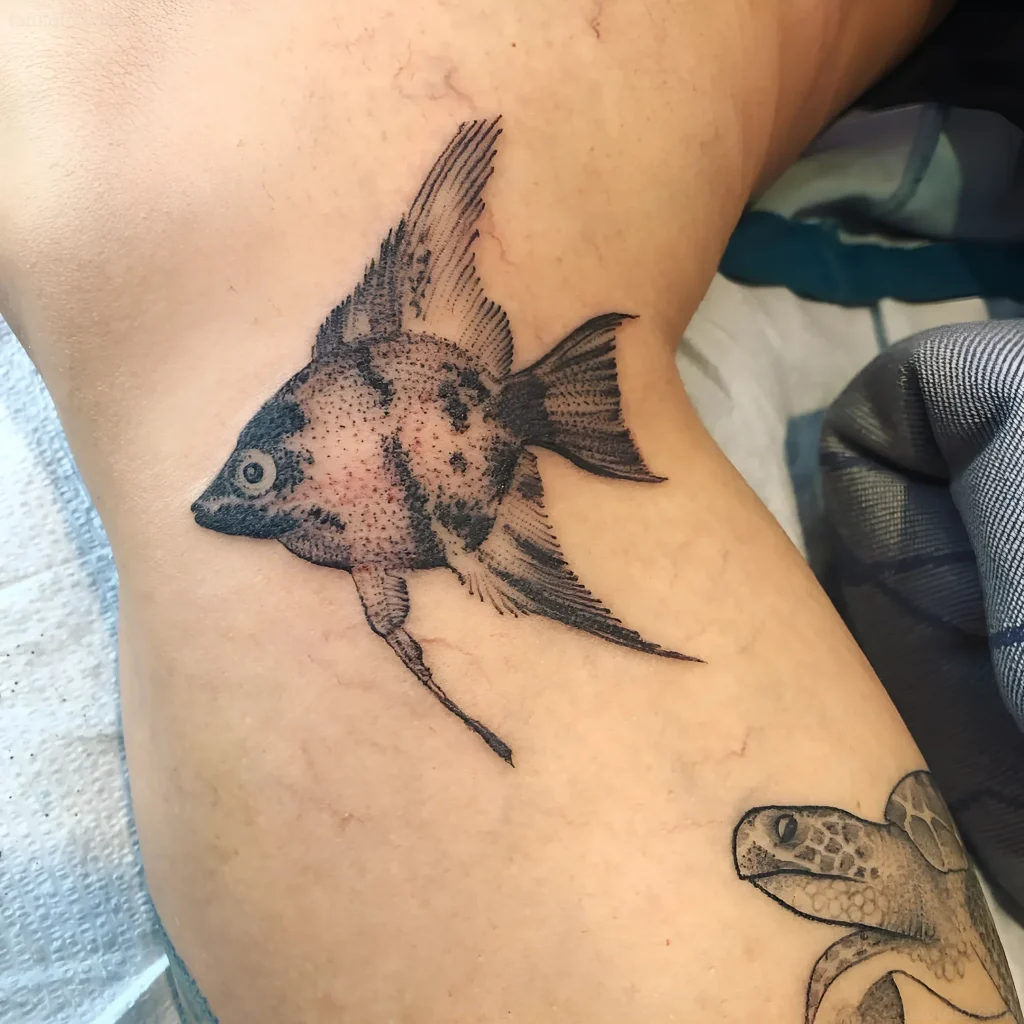
The History of Angelfish Depiction in Tattoos: From Origins to Modernity
Unlike mythologically loaded subjects (dragons, phoenixes), the history of the Angelfish tattoo is relatively young. Its popularity began to grow with the development of modern tattoo styles, especially those focusing on decorativeness, color, and realism.
The Angelfish does not have deep roots in traditional Eastern or Polynesian cultures. It is a product of modern aquaristics and artistic tattooing of the late 20th and early 21st centuries. Its appearance on the skin became possible thanks to breakthroughs in pigmentation and technique, allowing for the depiction of water transparency, light play on scales, and the delicacy of veil-like fins.


Evolution of Style and Context
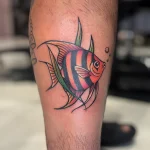
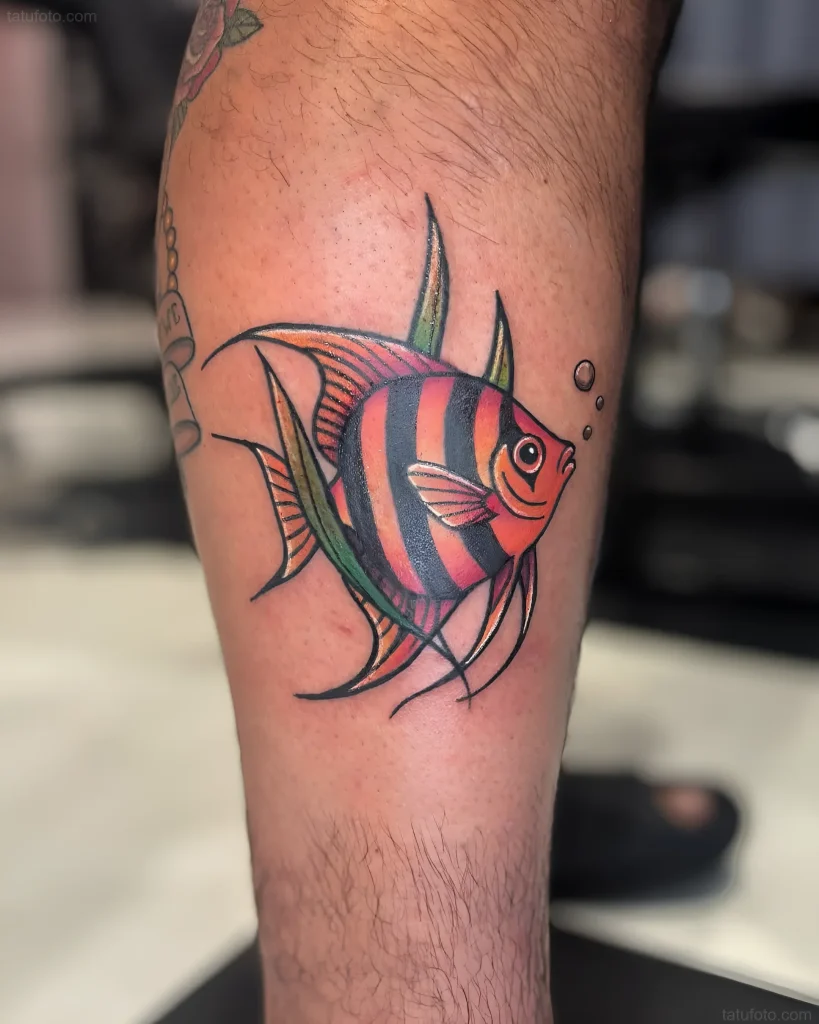
Initially, Angelfish appeared in styles imitating New School and Cartoon, where the emphasis was on bright, exaggerated features. However, this motif gained true popularity in two modern directions:
- Watercolor: This style is ideal for the Angelfish, as it allows the artist to imitate the aquatic environment, blurred edges, and picturesque color transitions, enhancing the feeling of lightness and weightlessness.
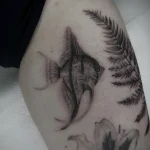
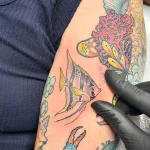
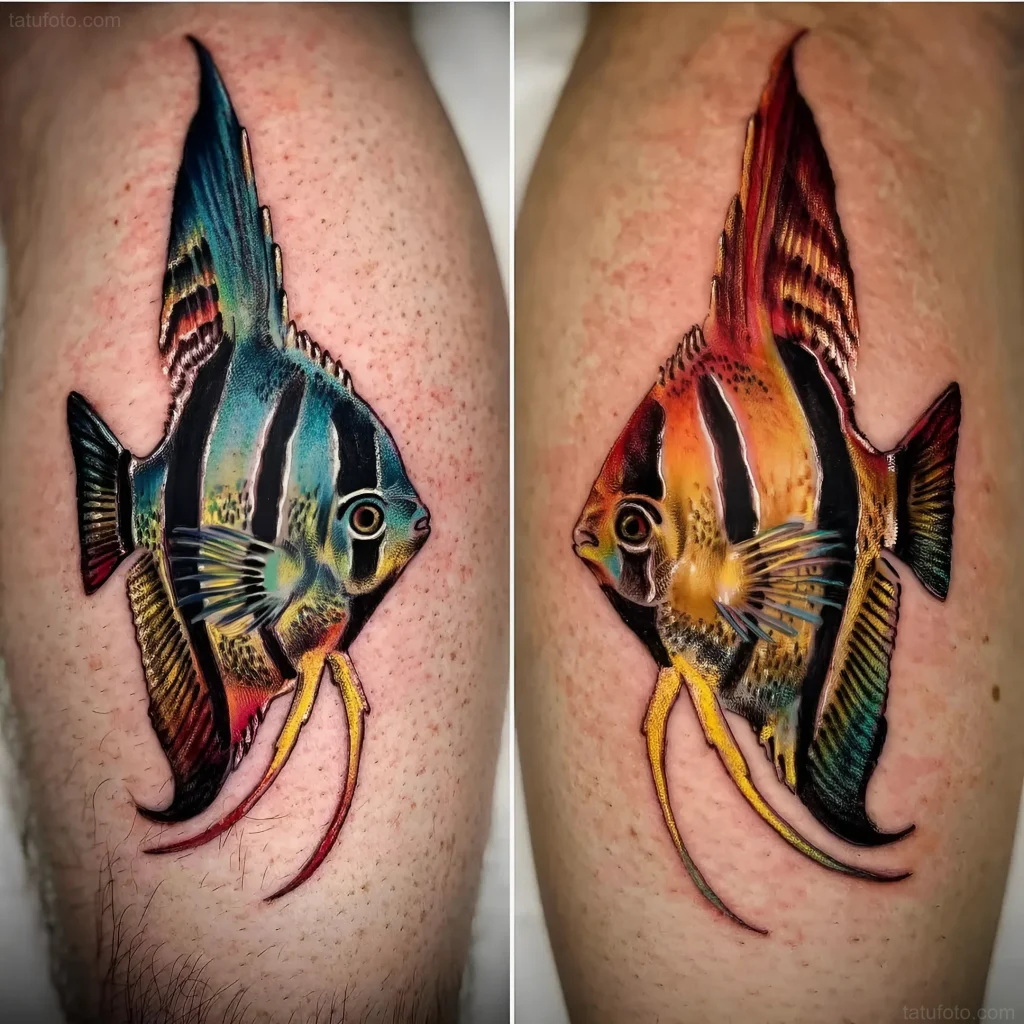
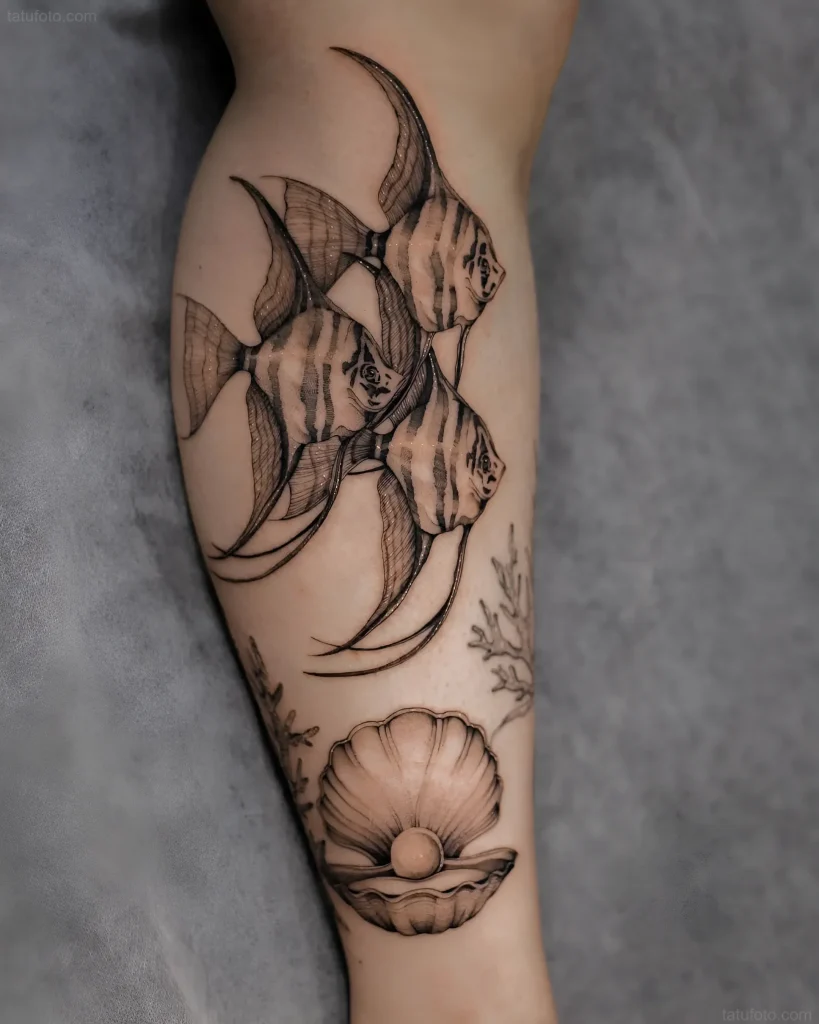
- Realism: In a realistic execution, the Angelfish is often depicted with striking anatomical accuracy, sometimes combined with elements of flora (aquatic plants, stones), turning the tattoo into a miniature, living underwater world. This is a choice for those who appreciate precision, the beauty of nature, and meditative tranquility.
Today, Angelfish tattoos are often chosen by people who want to move away from clichés and express their love for home comfort, tranquility, and complex, yet unobtrusive beauty.
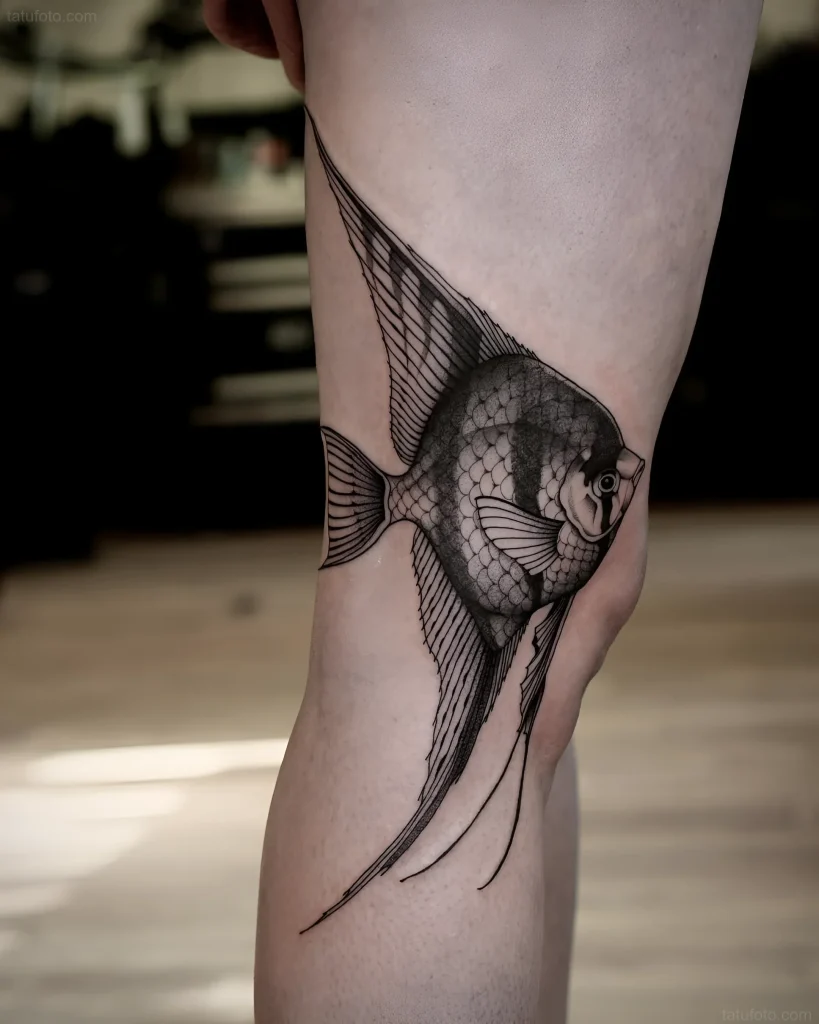
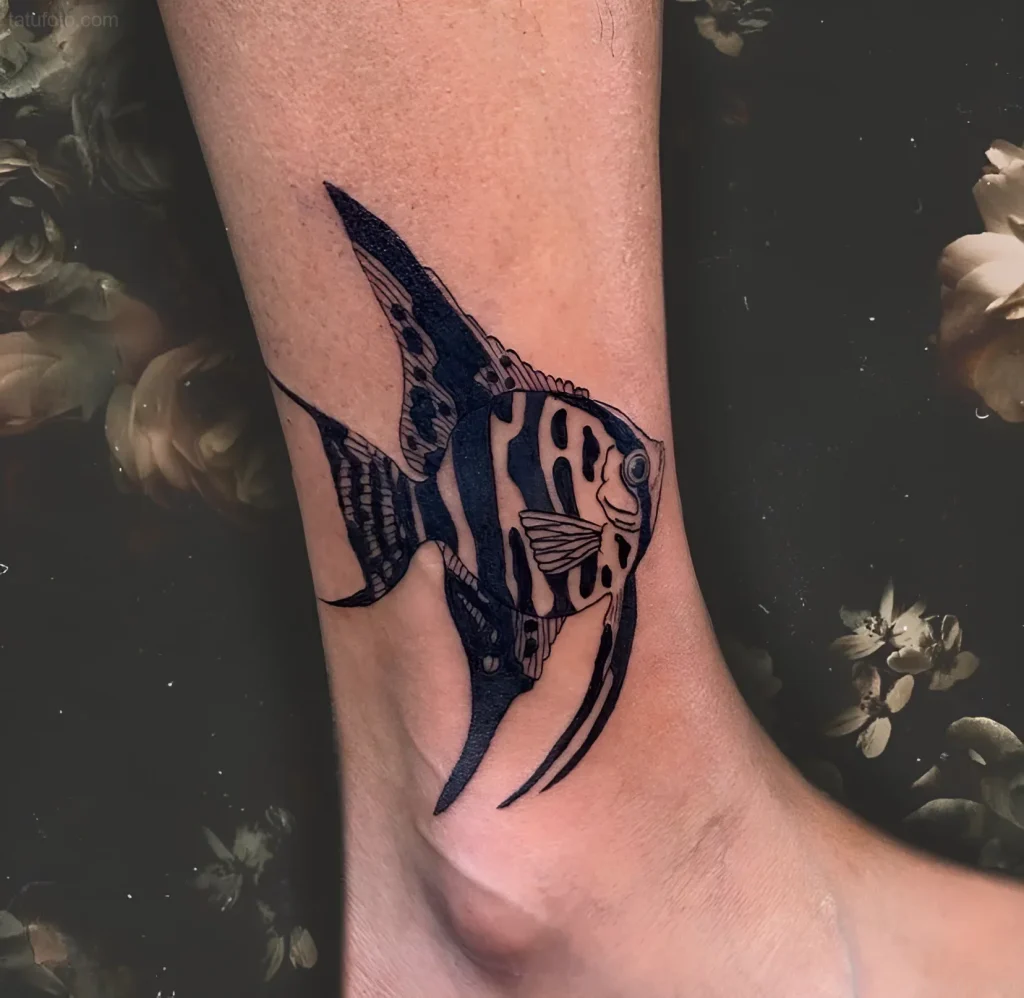
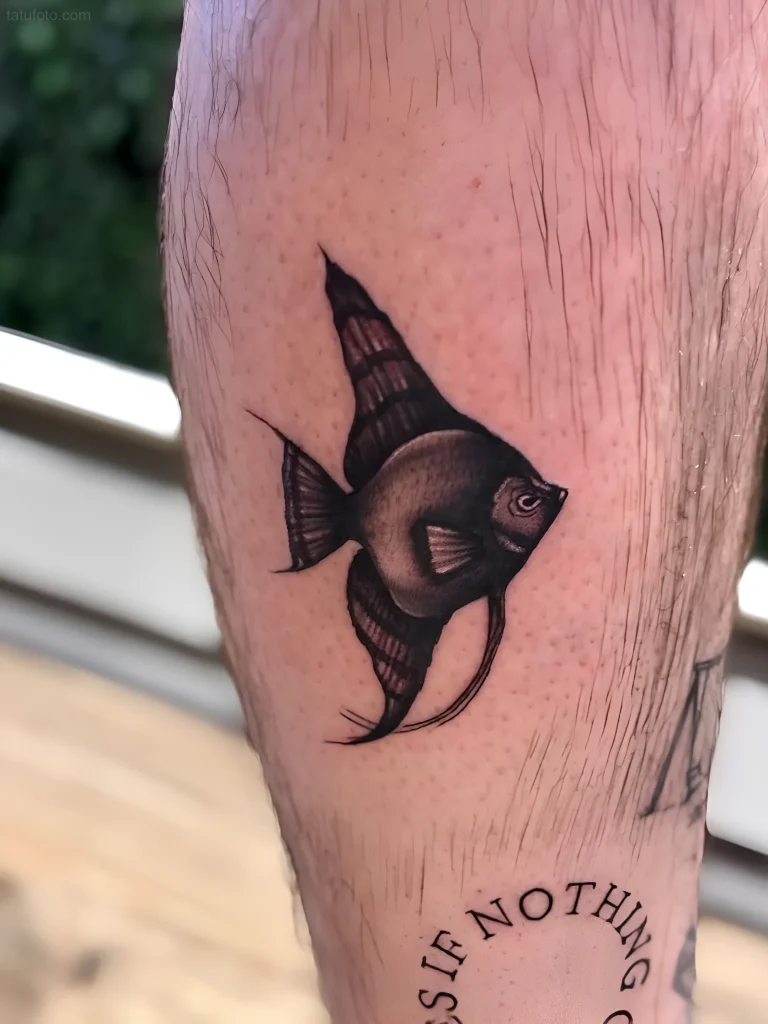
The Meaning of Angelfish Tattoo: Deep Symbolism and Interpretations
Since the Angelfish is not just a fish but a symbol bred by humans through selection, its meaning is closely linked to the concepts of controlled beauty and artificial paradise. Let’s consider the most profound and common interpretations of this motif.
Grace, Elegance, and Aristocracy
The shape of the Angelfish, especially its high dorsal and anal fins, resembles the outline of a fan or a wing. This makes it a symbol of grace and aristocratic bearing. The tattoo can reflect the owner’s aspiration for:
- Inner dignity and external refinement.
- The desire to maintain composure and control emotions, remaining elegant even in stressful situations.
Balance, Harmony, and Meditation
Angelfish as an anchor of calm: The tattoo serves as a reminder of the need to maintain inner peace, avoid hustle and bustle, and find harmony in everyday life. If you have gone through a period of chaos or stress, the Angelfish can become a visual manifesto of the transition to a more measured existence.
Spiritual Purity and Innocence
Many varieties of Angelfish have a light, almost pearlescent coloration. Combined with their “angelic” shape (hence the English name Angelfish), they symbolize:
- Pure intentions: The desire to act honestly and openly.
- Striving for ideals: Seeking spiritual perfection and rejecting pettiness.
For people engaged in spiritual practices or meditation, the Angelfish can serve as a symbol of transition between worlds or a reflection of their inner, untainted consciousness.
Love and Family Bonds (Couple Tattoos)
Angelfish are fish that often form stable pairs. They show care for their offspring (laying eggs on plant leaves). This makes them an excellent choice for couple tattoos or a symbol of strong family relationships:
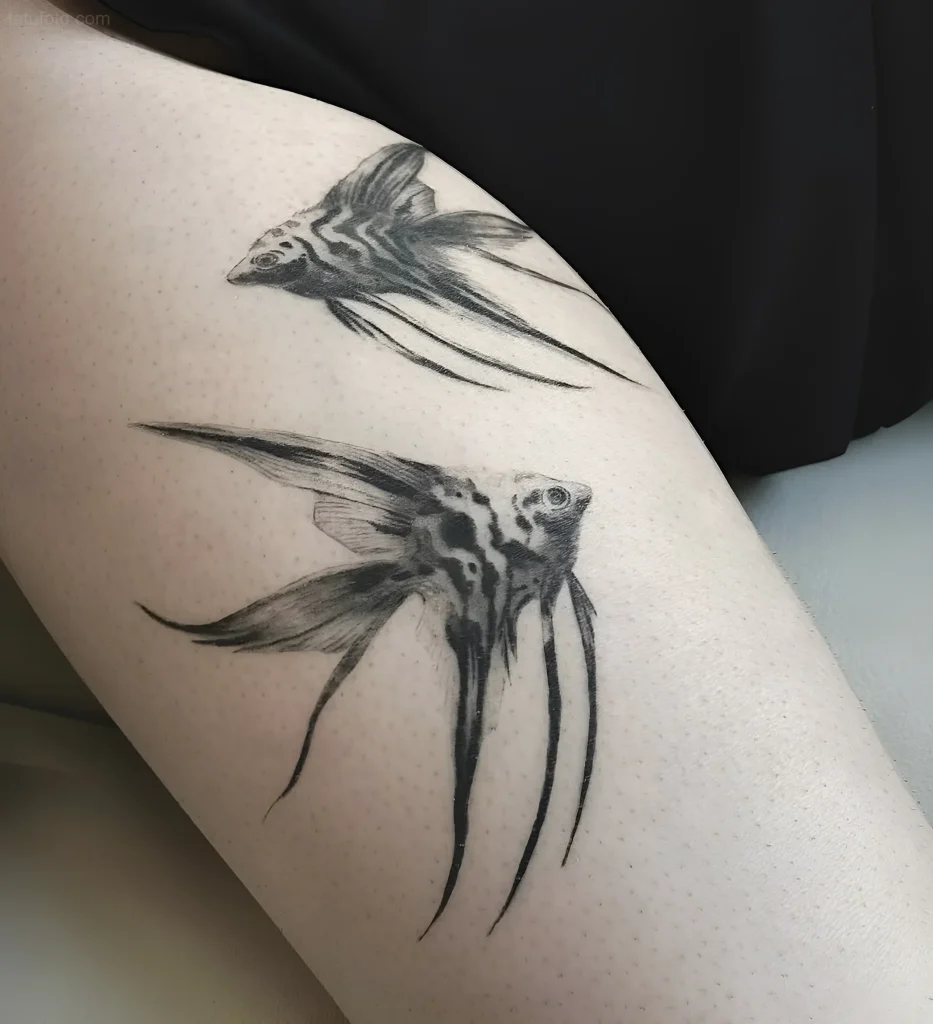
Interpretation in a pair: Two Angelfish swimming side-by-side or facing each other symbolize deep devotion, fidelity, harmonious partnership, and joint care for the future. This is a more subtle and less obvious alternative to traditional symbols of love.
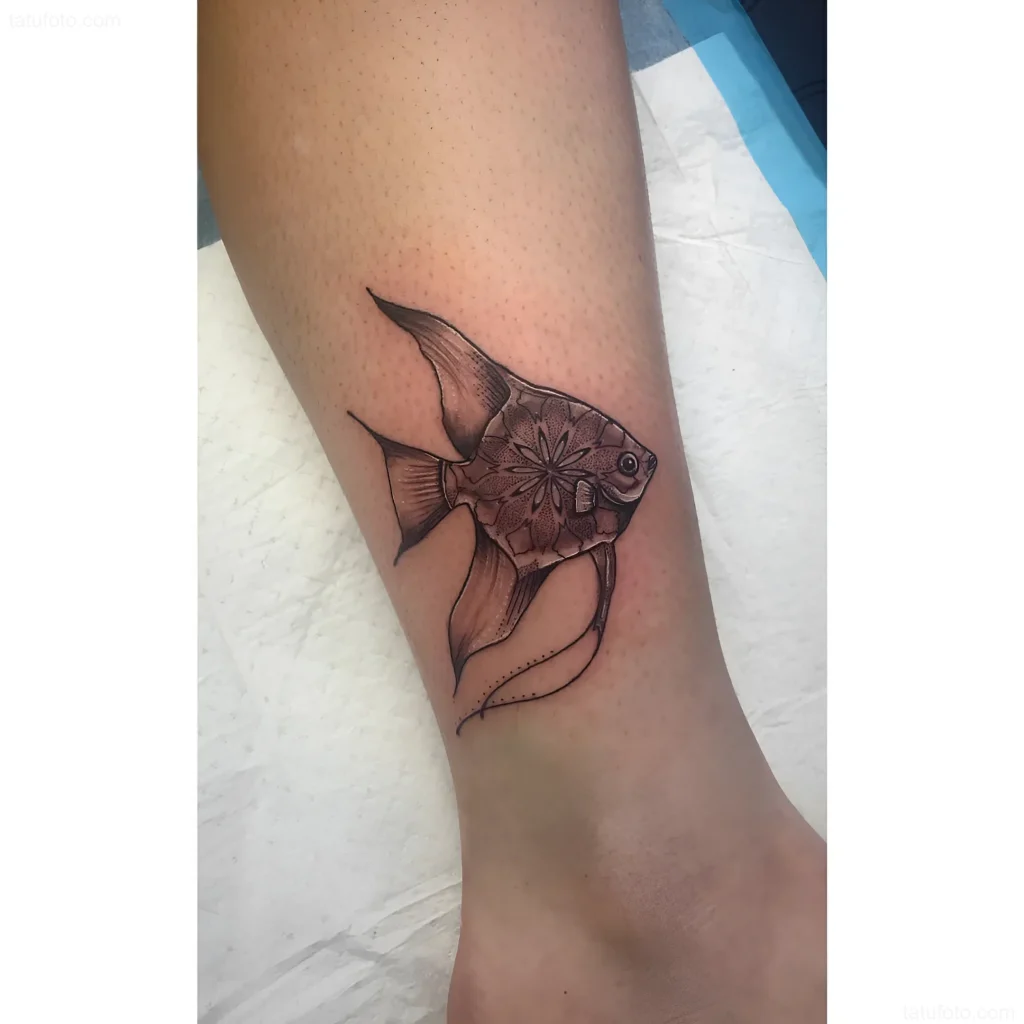
Angelfish Tattoo Styles: Realism, Watercolor, Graphic, and More
The choice of style drastically changes the perception of an Angelfish tattoo, influencing which aspect of its symbolism will dominate. An expert approach requires understanding the synergy between the fish’s form and the execution technique.
Realism
Dominant Symbolism: Precision, beauty, peace.
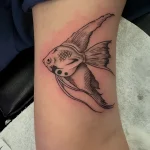
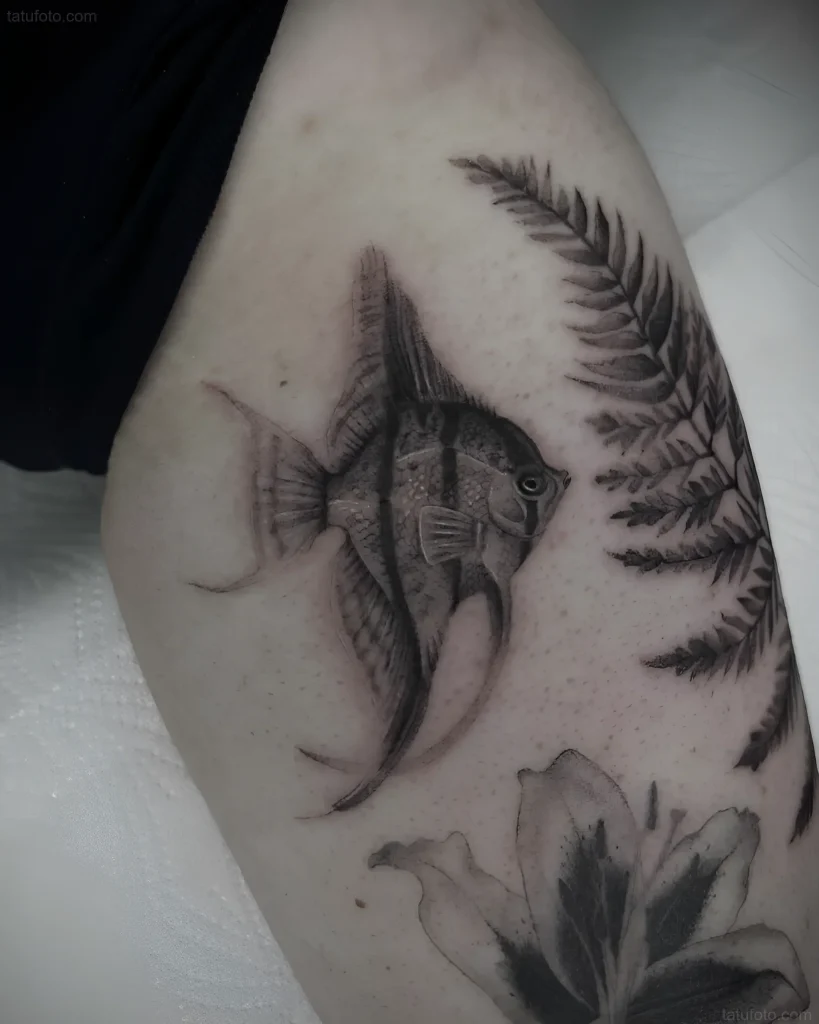
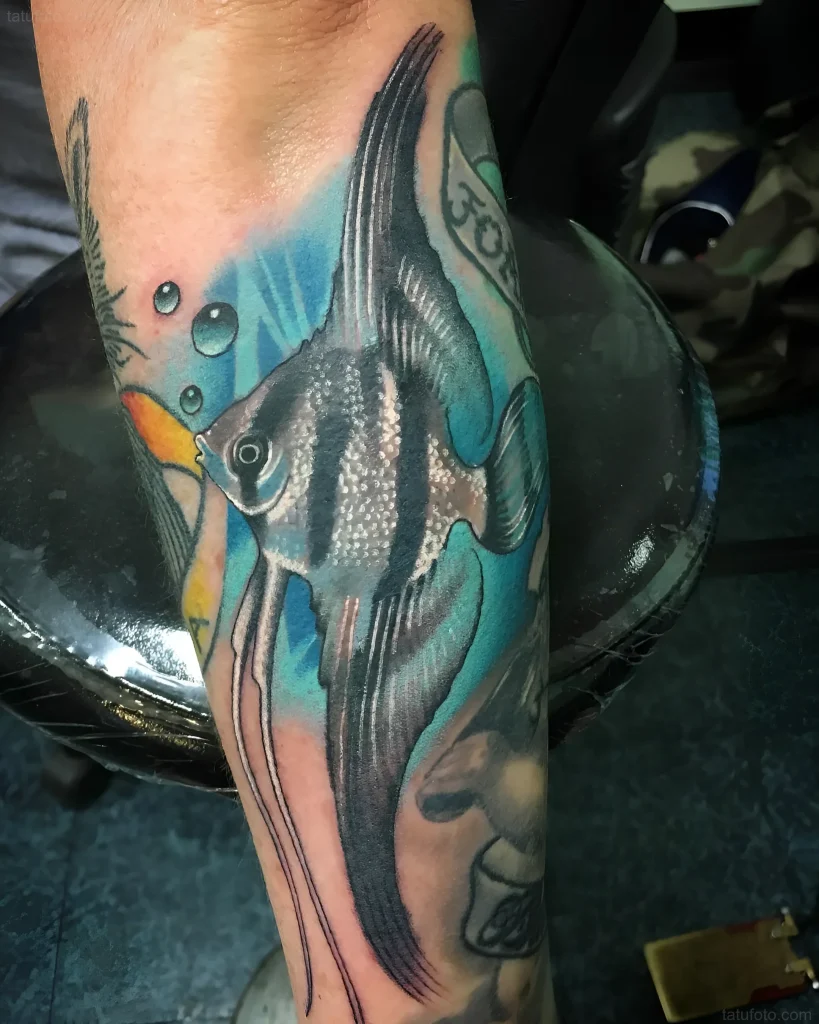
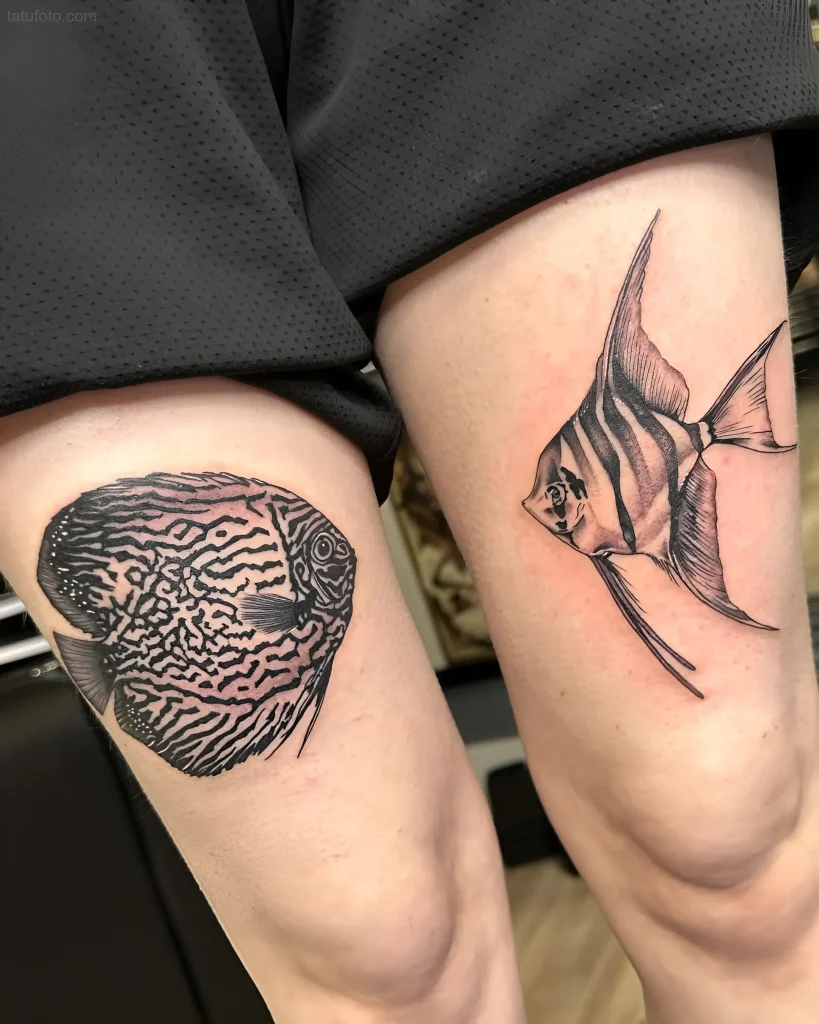
Realism demands masterful use of color and shading from the artist. In this style, the Angelfish looks as natural as possible, as if just pulled from the water. Complex gradients are used to convey the pearlescent sheen of the scales and the translucency of the fins. Realism is ideal for those who want to emphasize the aesthetic perfection of the fish and its natural harmony. These works are often done on large areas of skin to accommodate a detailed underwater landscape.
Watercolor
Dominant Symbolism: Emotionality, freedom, movement.
The Watercolor style is perhaps the most popular for Angelfish. The technique imitates paint spreading on canvas, creating the effect of a dynamic aquatic element. An Angelfish in watercolor looks light, weightless, and is often surrounded by bright but blurred splashes of color (blue, turquoise, purple). This is a choice for creative, emotional individuals who value freedom of self-expression and are not afraid of bright colors.
Graphic & Blackwork
Dominant Symbolism: Structure, mysticism, minimalism.
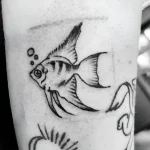
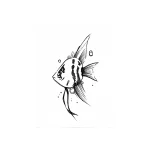
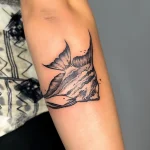
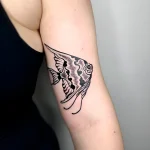
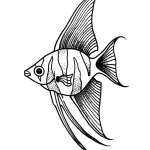
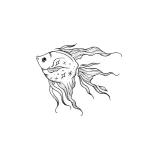
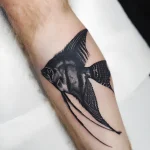
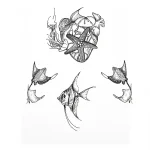
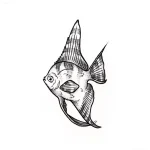
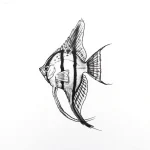
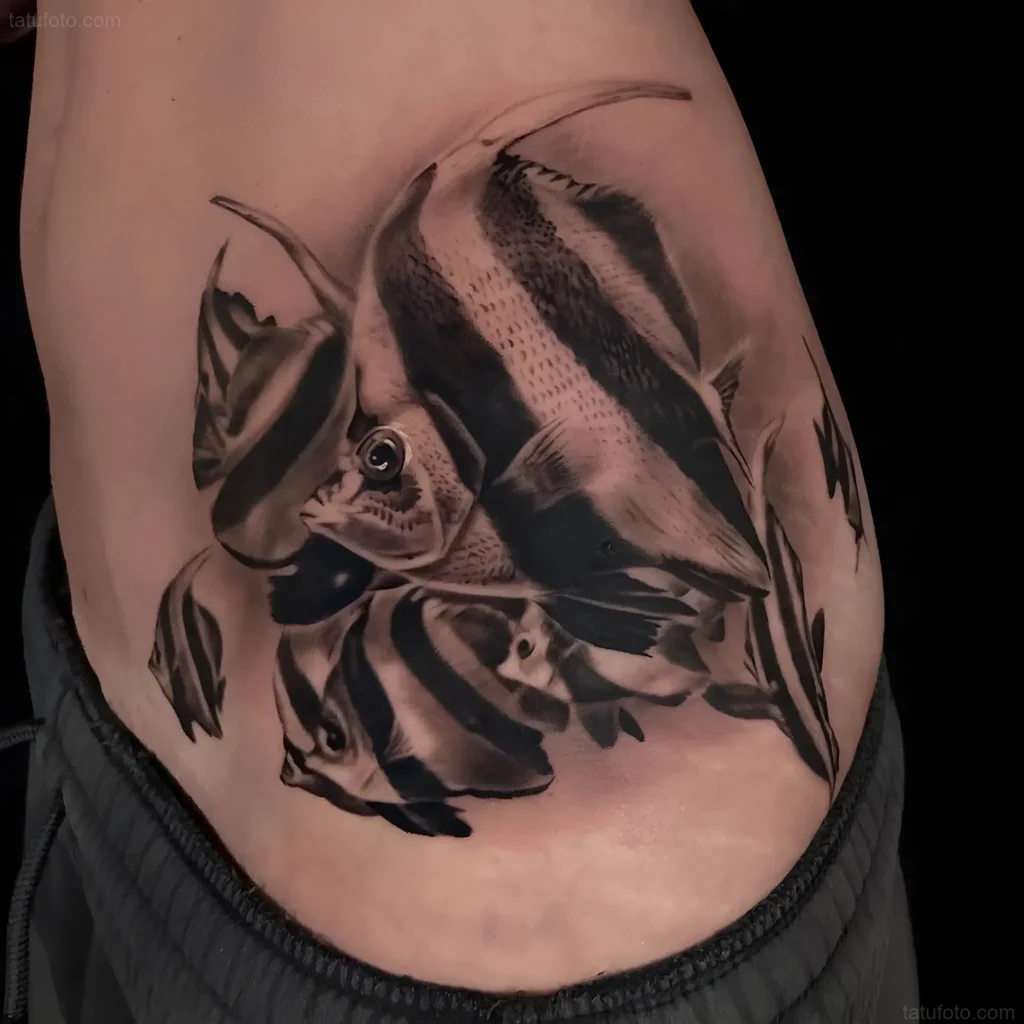
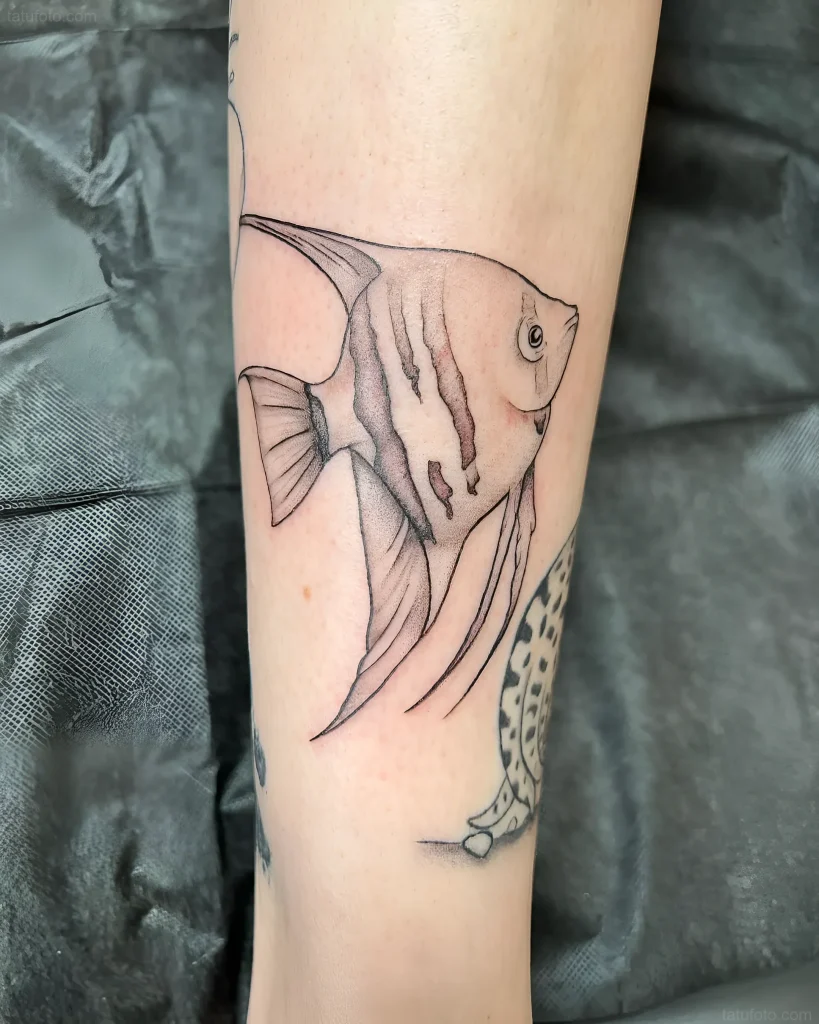
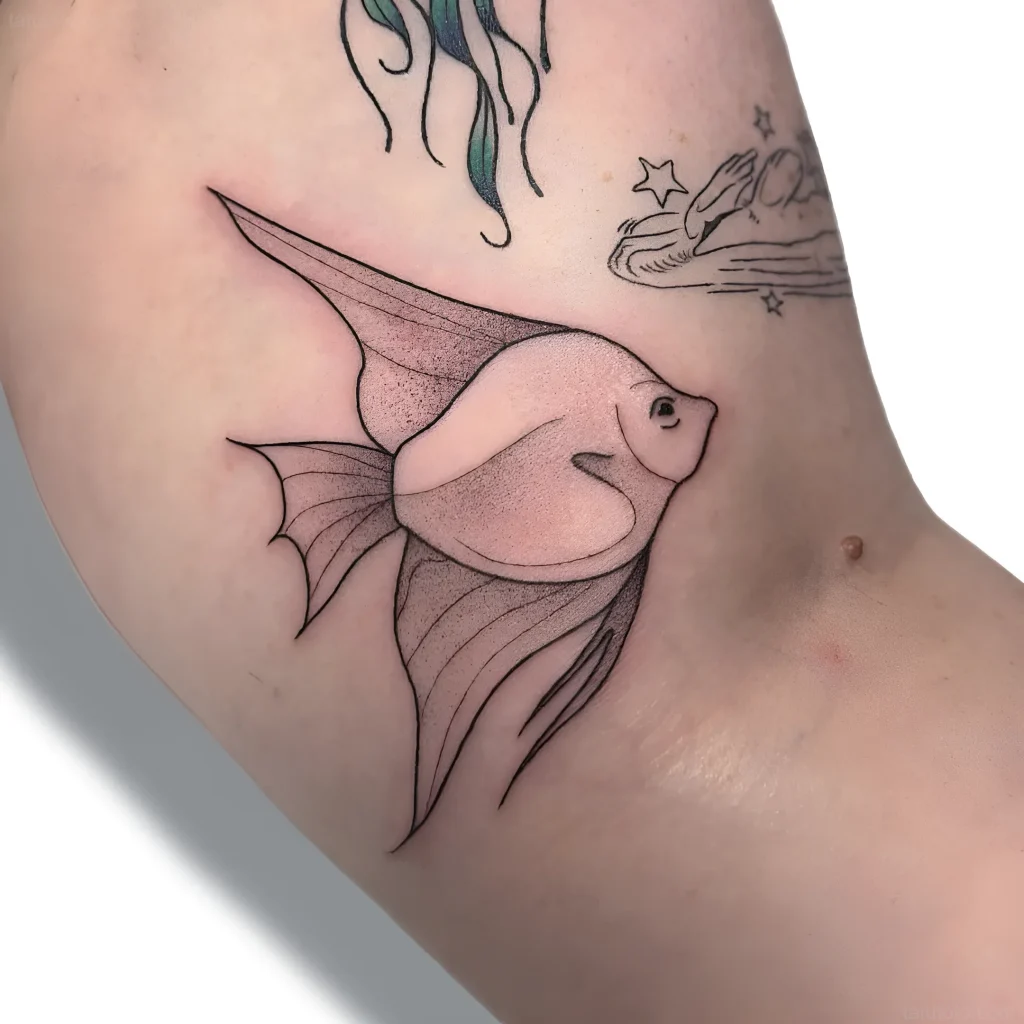
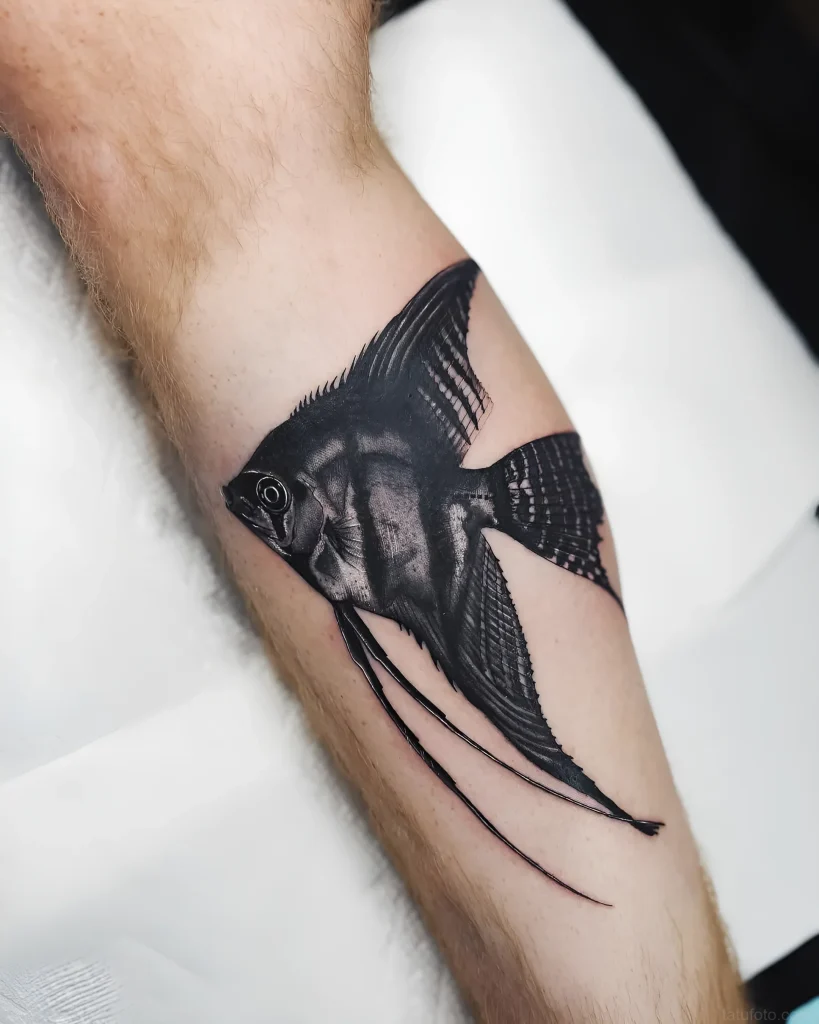
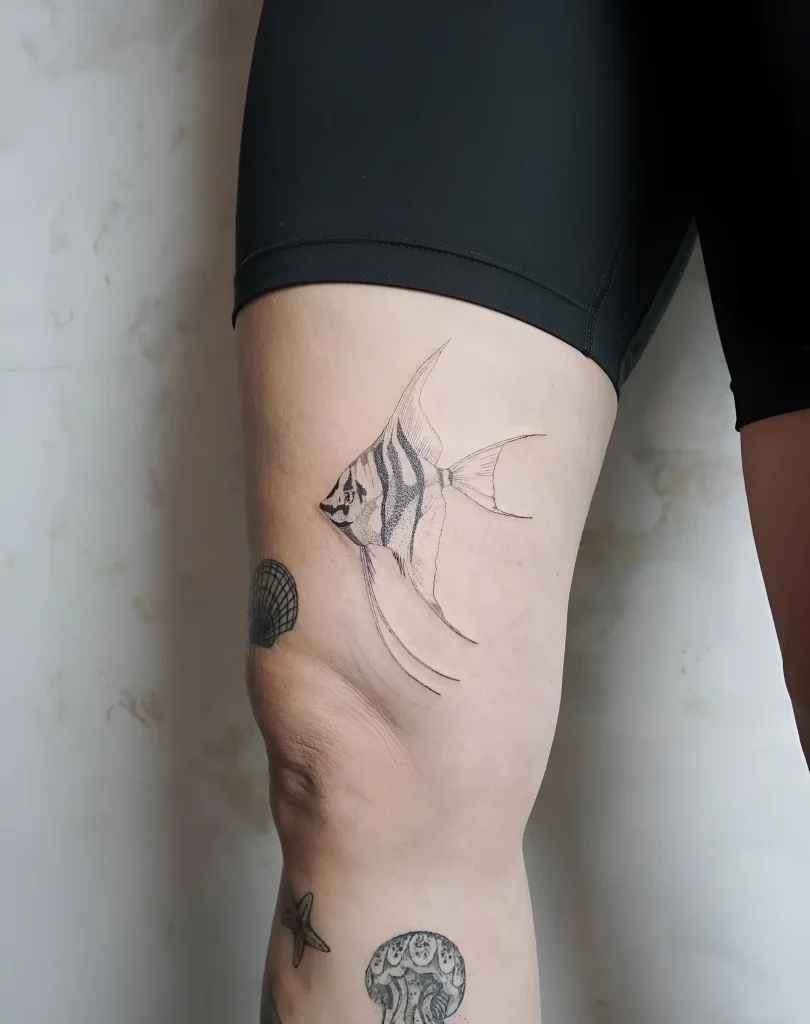
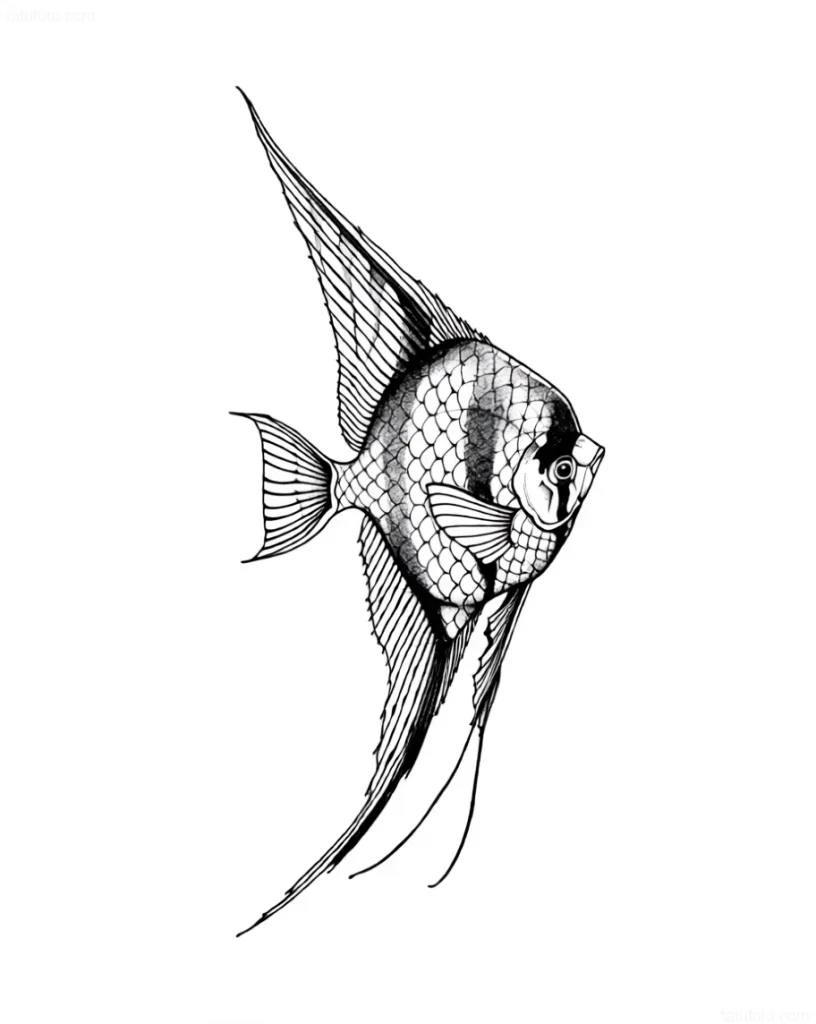
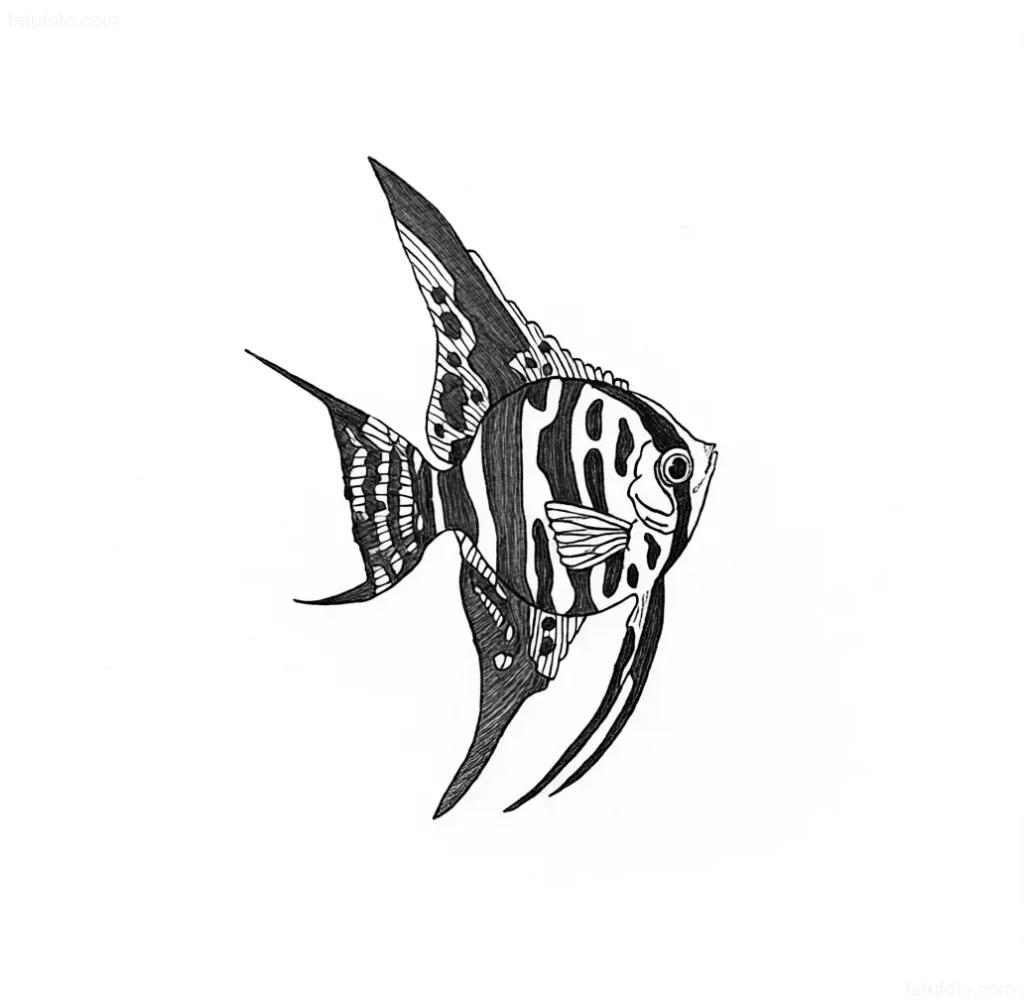
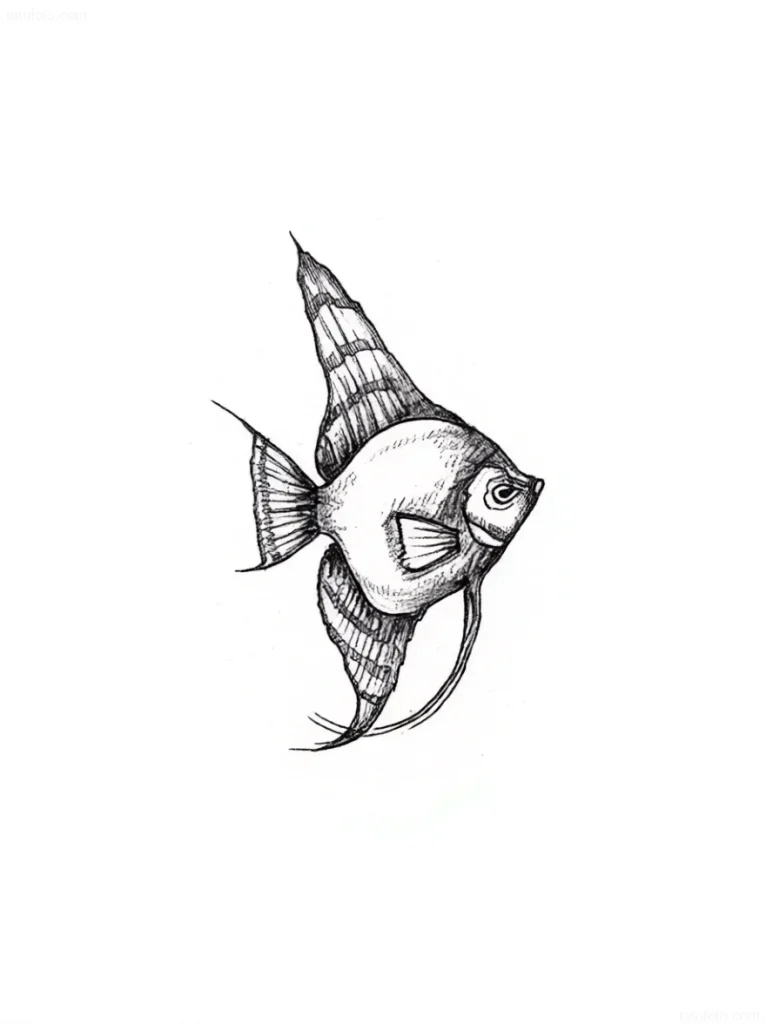
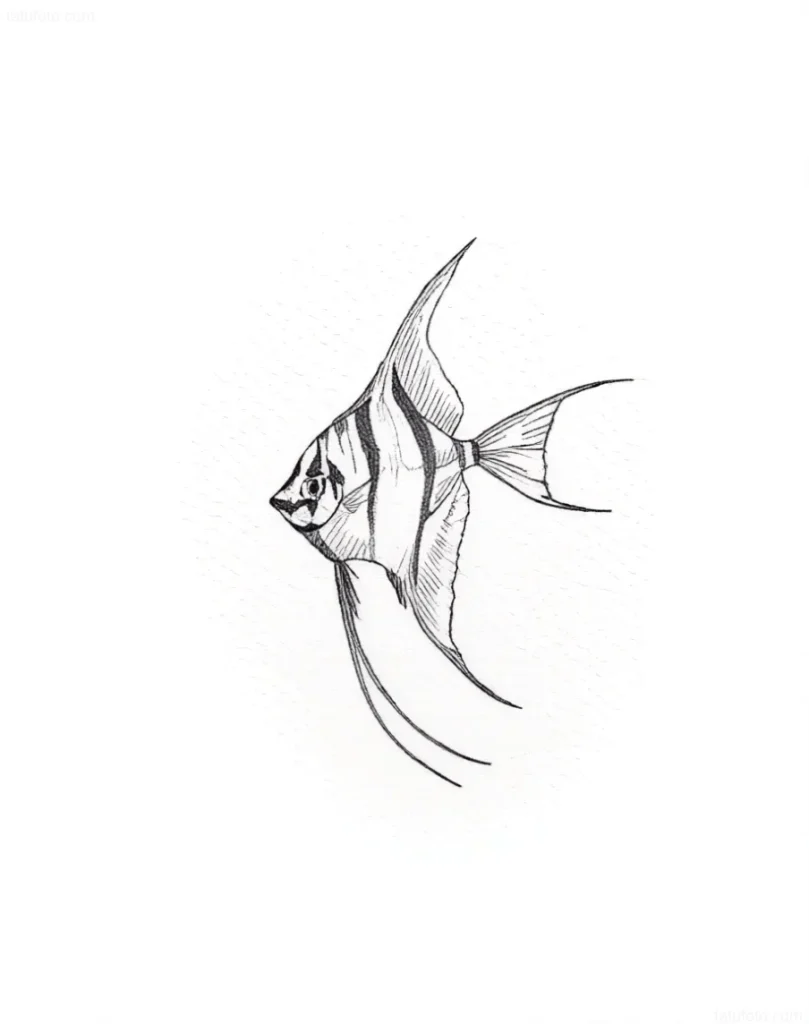
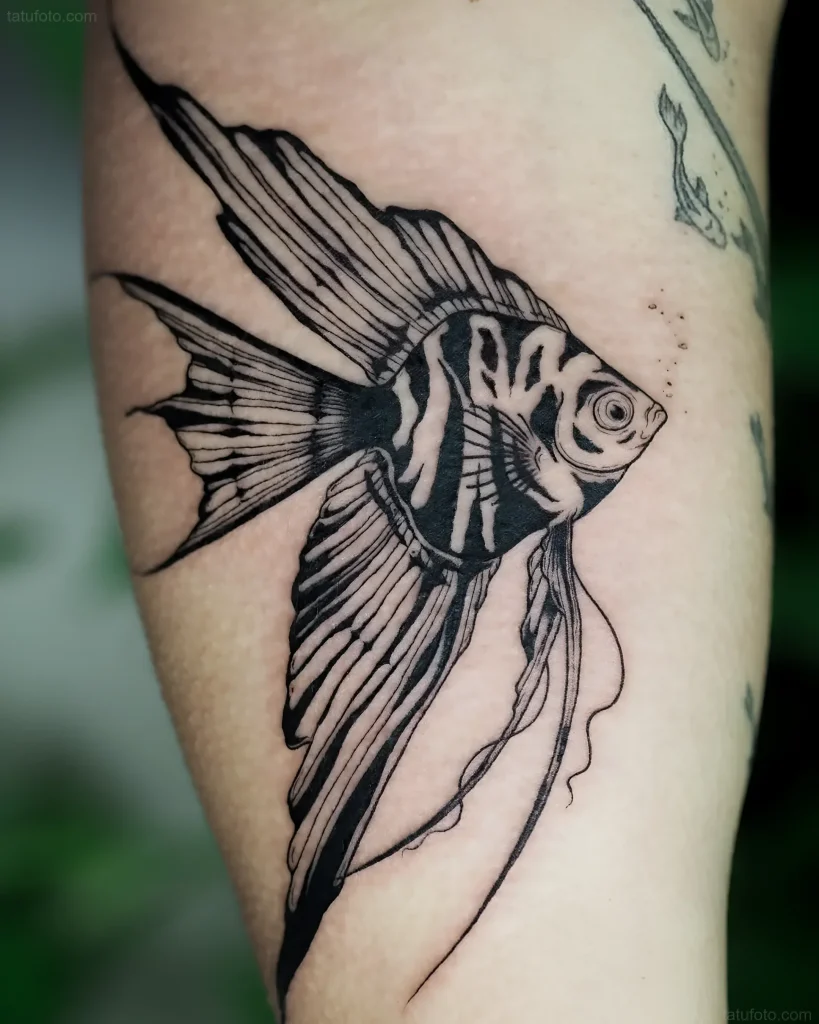
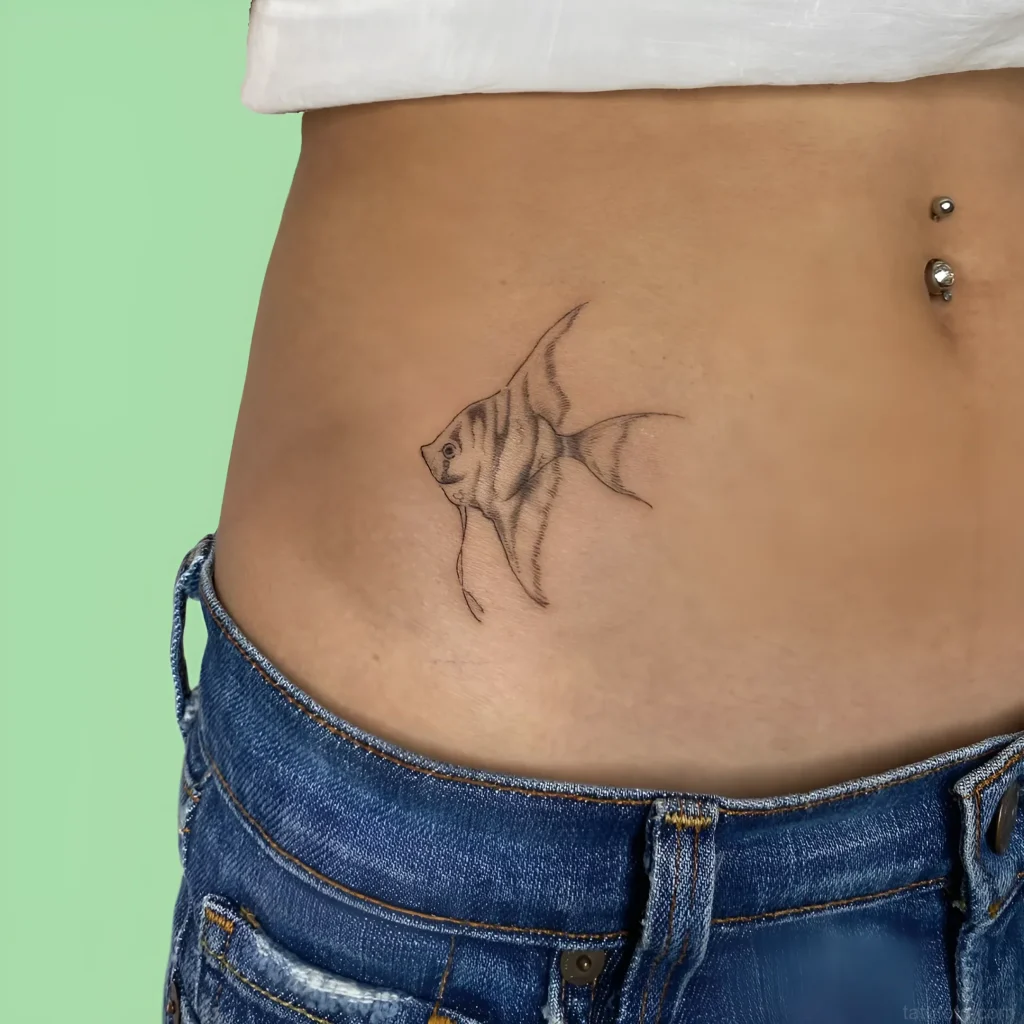
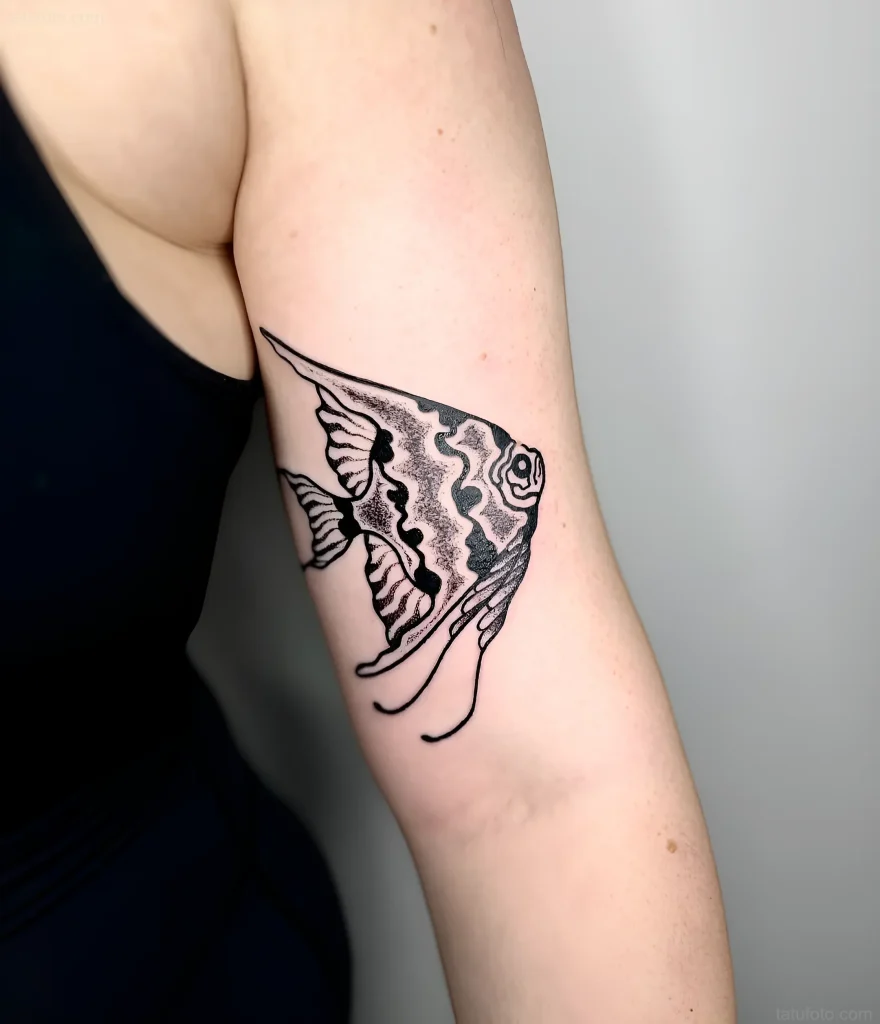
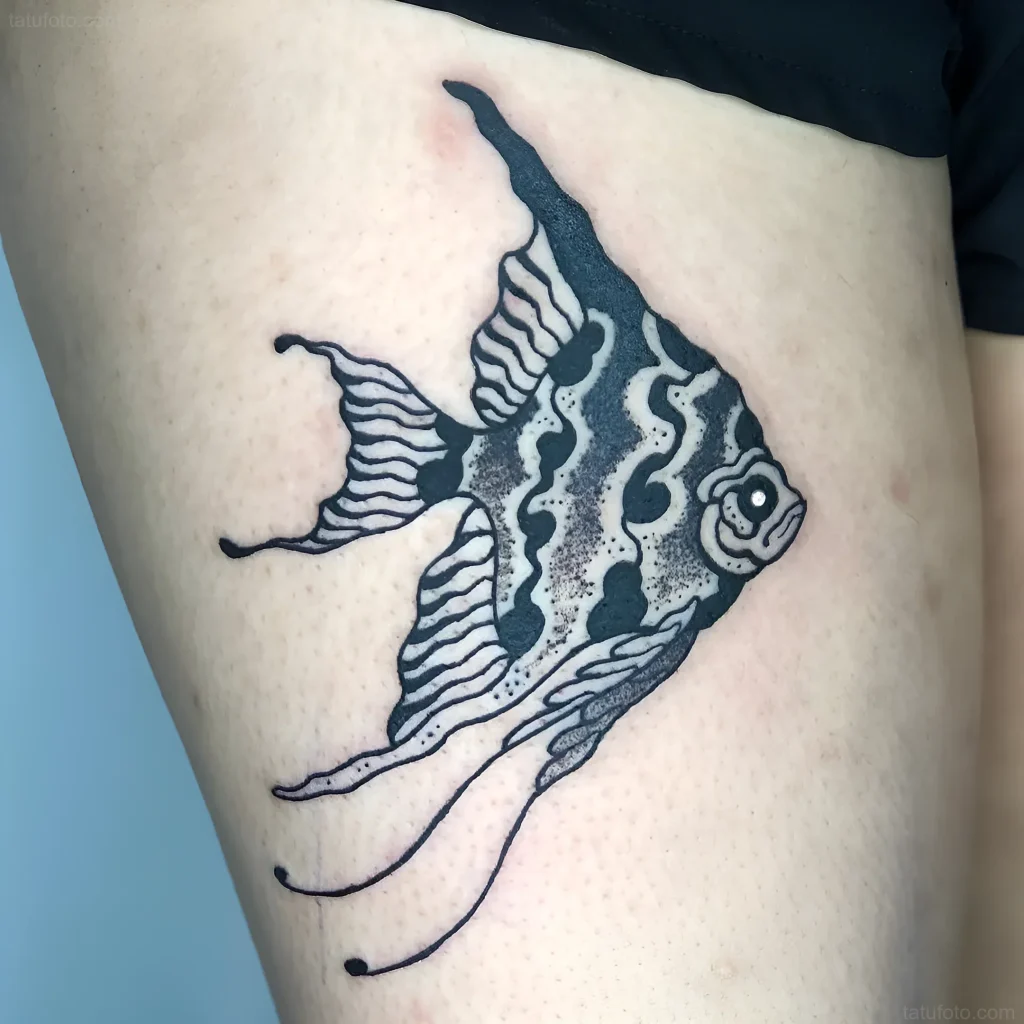
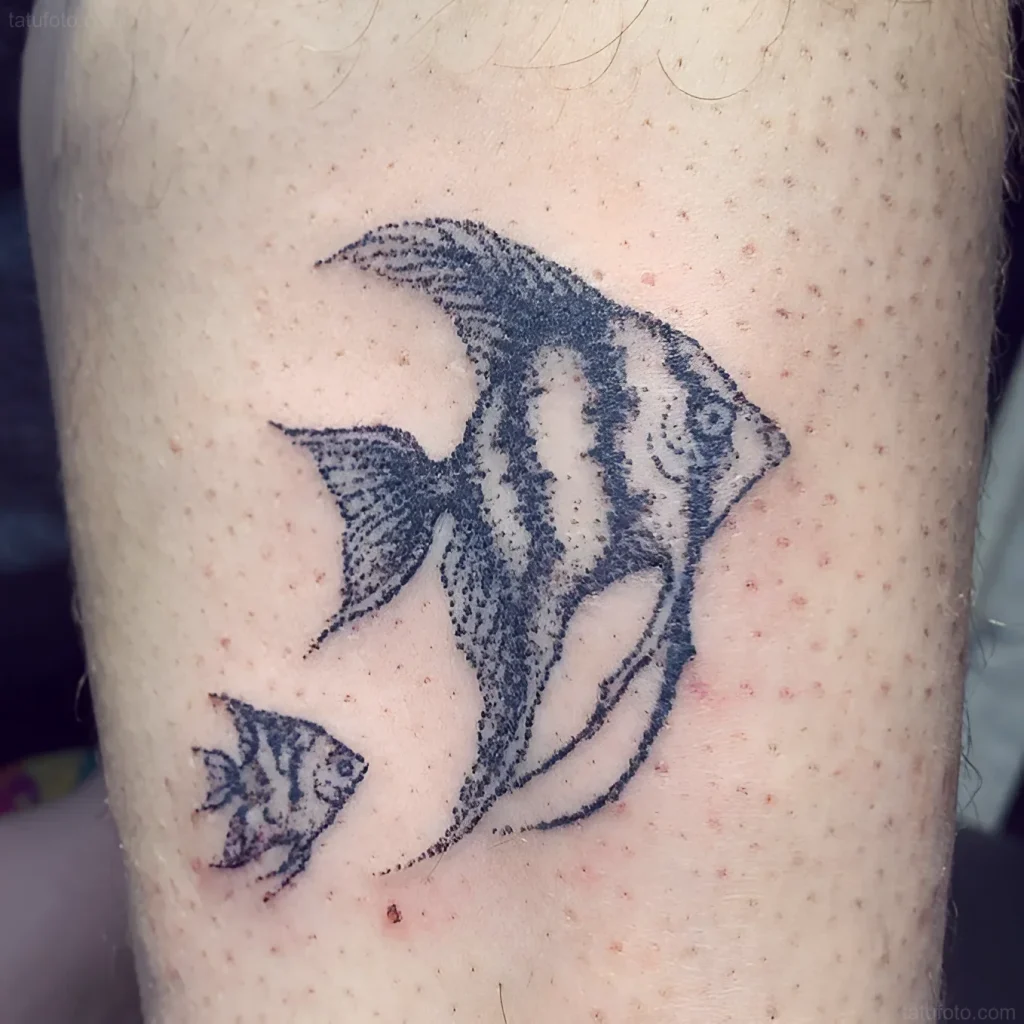
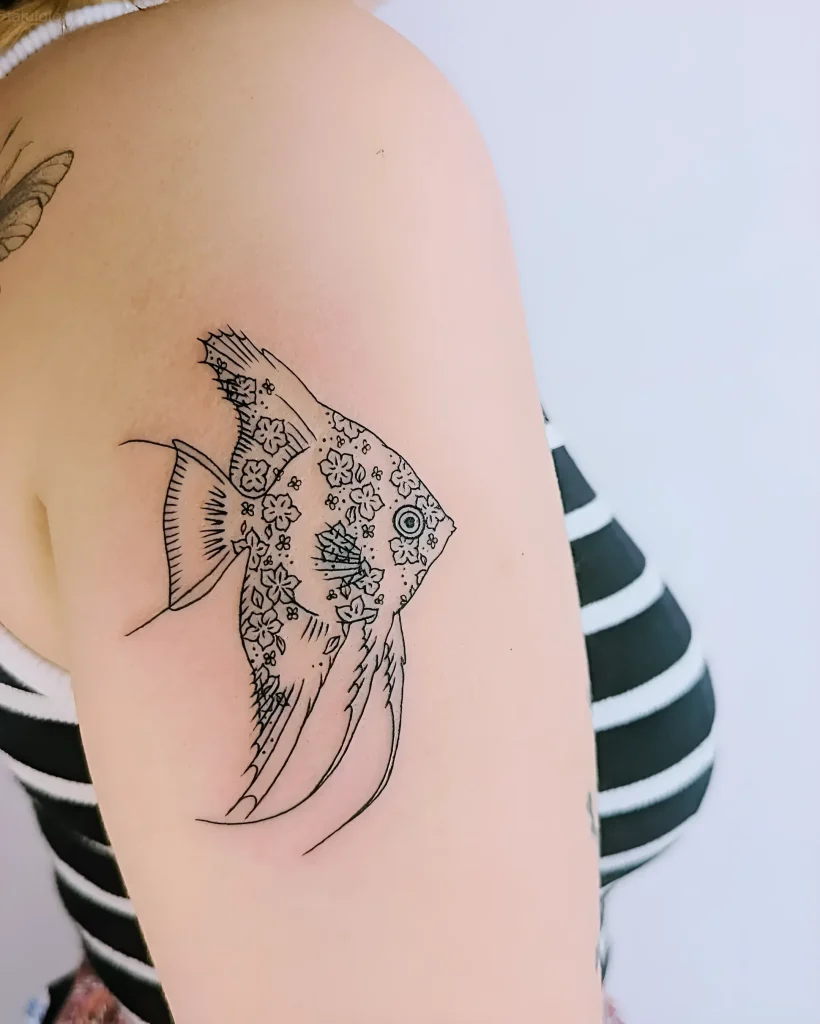
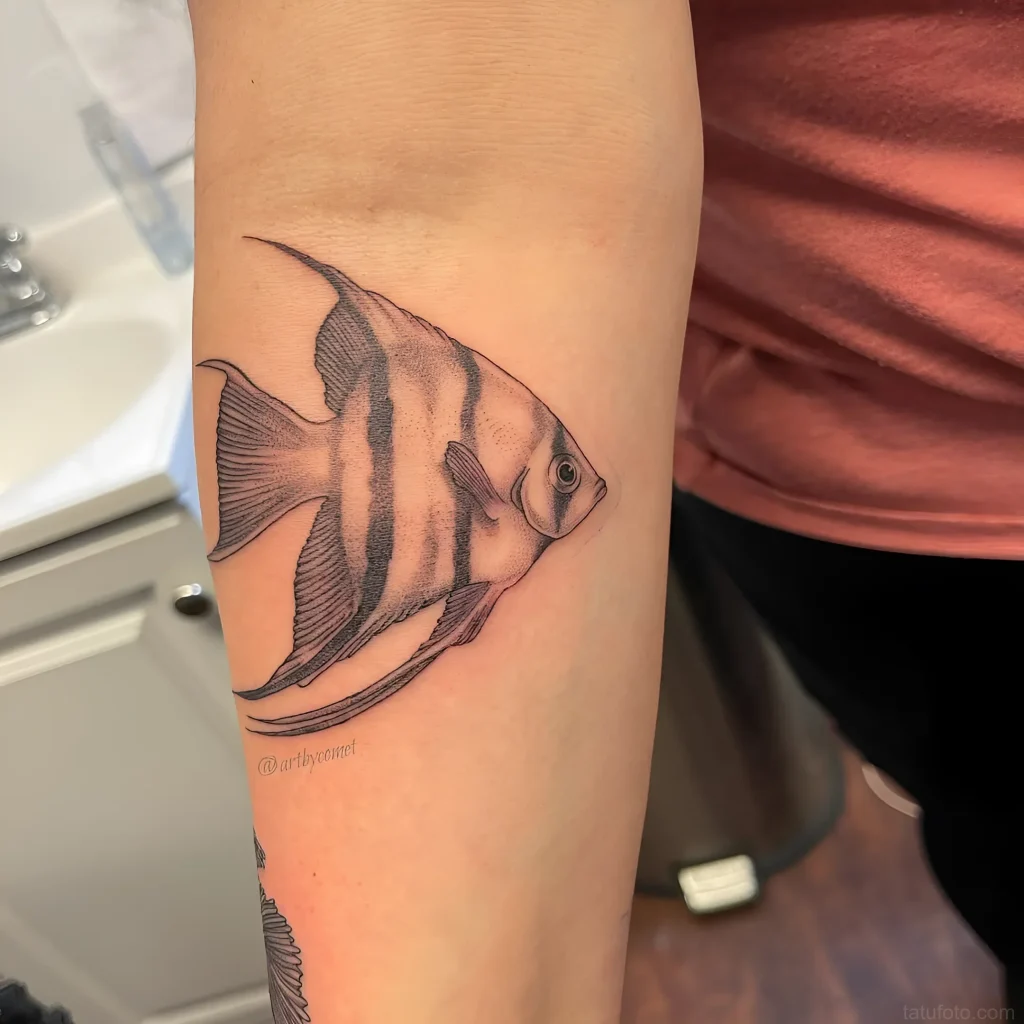
In graphic execution (especially in Dotwork or Linework), the emphasis shifts from color to form. The symmetrical triangular silhouette of the Angelfish is ideal for geometric patterns. In Blackwork, the fish can be rendered with intricate ornamentation within the outline, giving it a more abstract or totemistic meaning. This is a choice for those seeking silhouette, structural beauty and preferring a classic monochrome palette.
Trash Polka
Dominant Symbolism: Duality, contrast, defiance.
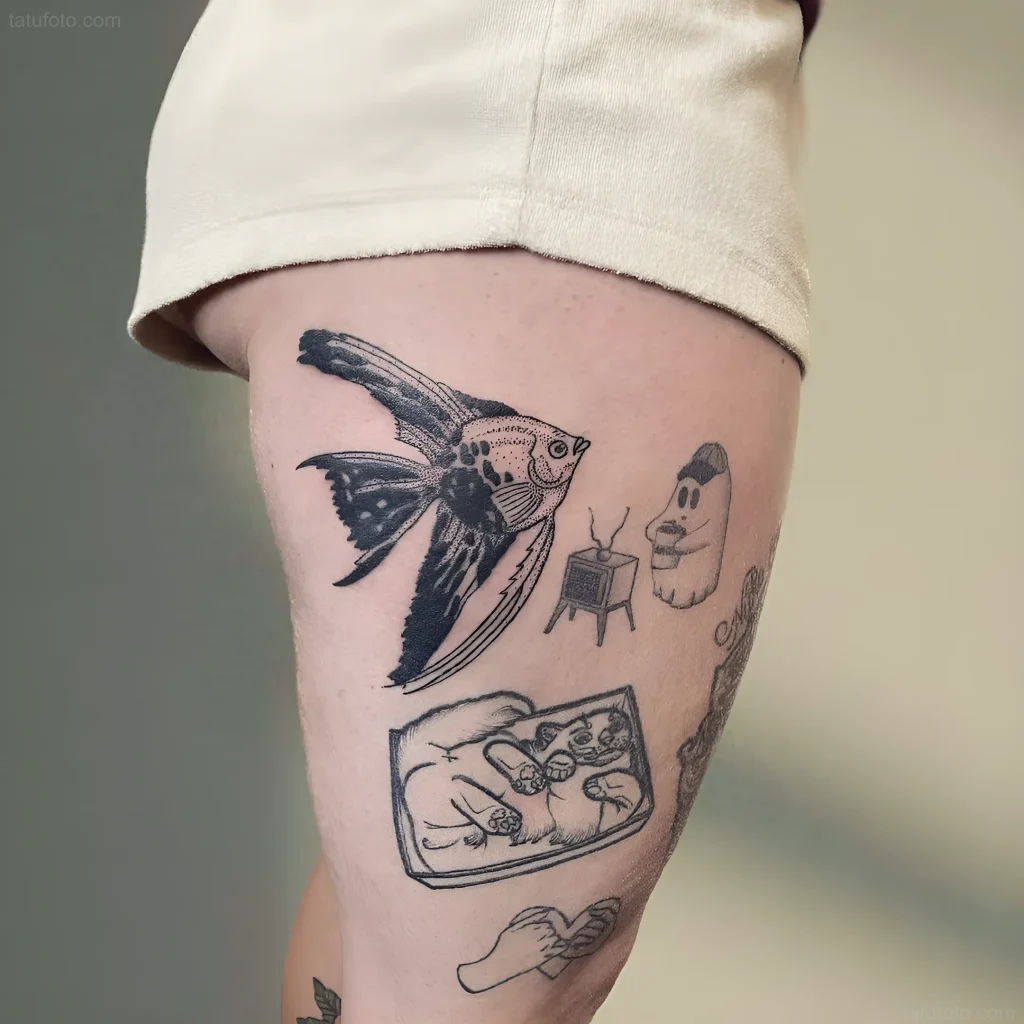
An unusual but powerful option. It combines a realistic depiction of an Angelfish with aggressive red strokes, lettering elements, and black splatters. This interpretation can symbolize the contrast between external grace and internal chaos or the struggle to maintain purity in an imperfect world.
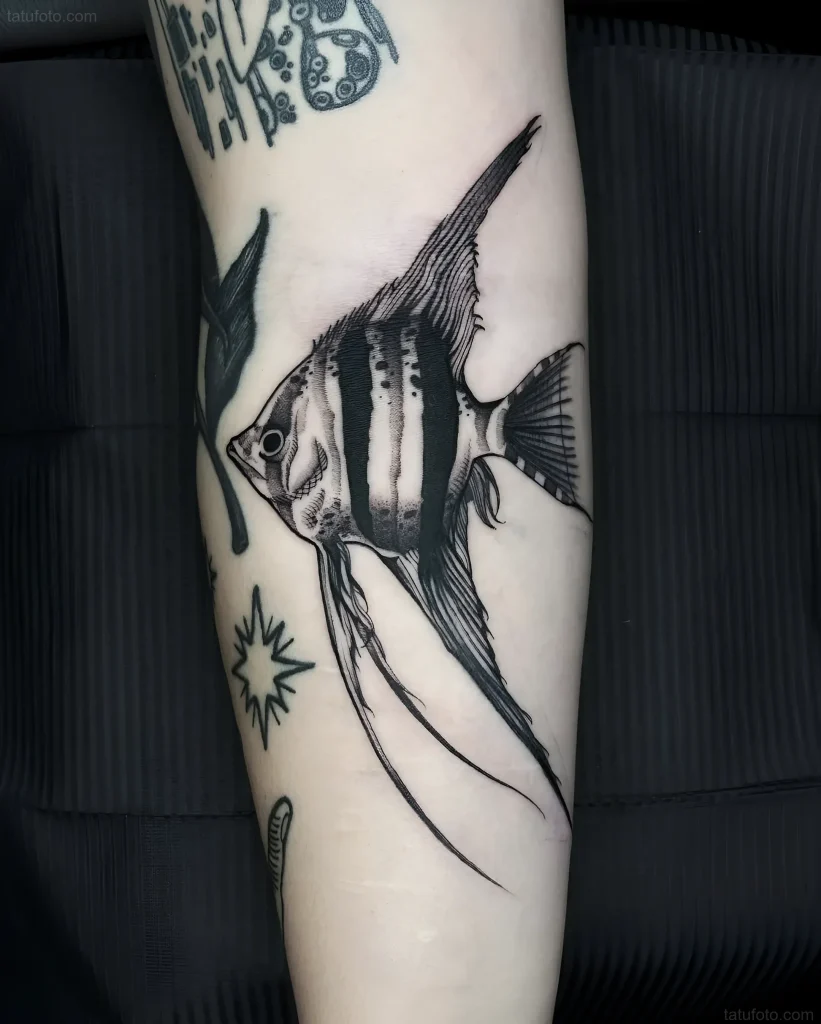
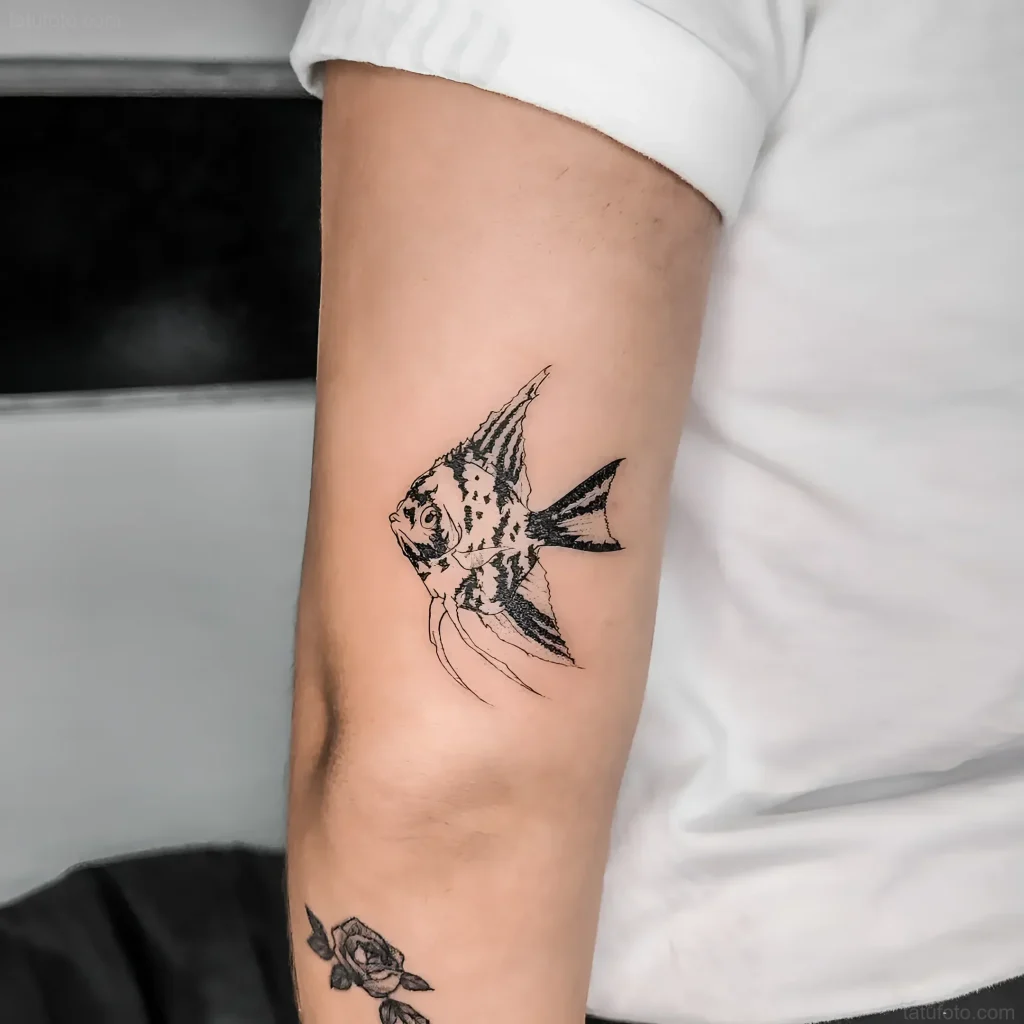
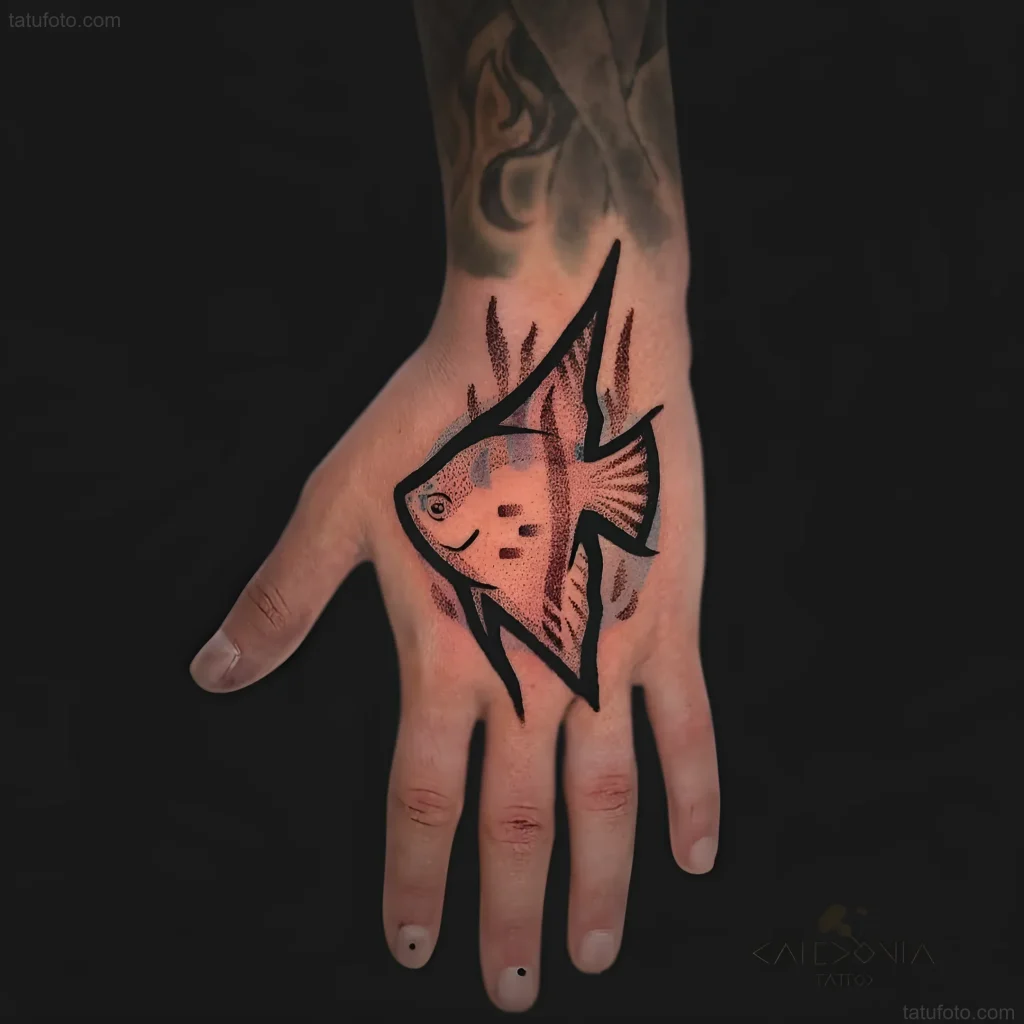
Best Places for an Angelfish Tattoo: Placement and Design
Choosing the location for an Angelfish tattoo is crucial, as it should allow its elegant form and visual dynamics to be fully expressed. The Angelfish is a vertically oriented motif that requires space for its fin “wings.”
Ideal Areas for Large and Medium Designs
For detailed works in Realism or Watercolor, where movement and the aquatic environment need to be conveyed:
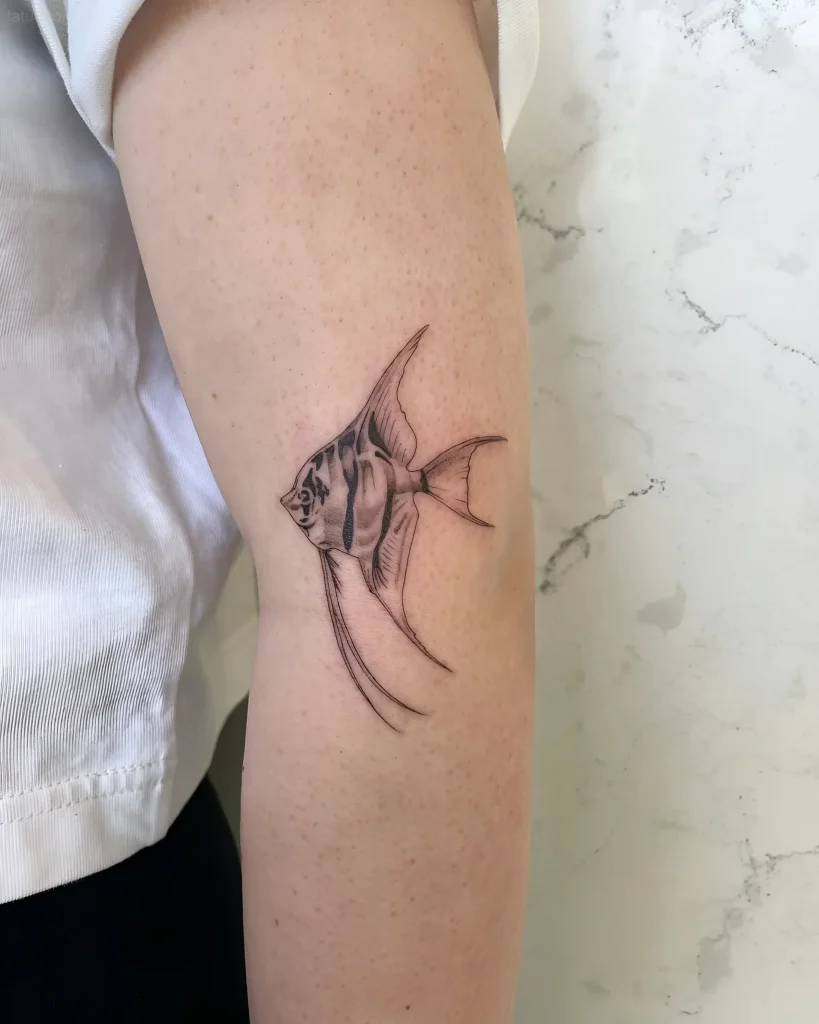
- Forearm (inner or outer side): An excellent location that utilizes the vertical elongation of the fish. This provides good visibility and allows the grace of the lines to be easily showcased.
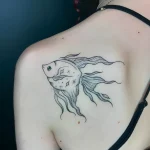
- Shoulder blade or upper back: Ideal for depicting one large Angelfish or a pair. There is enough space here to create an entire underwater landscape, and the fins can naturally follow the curves of the muscles.
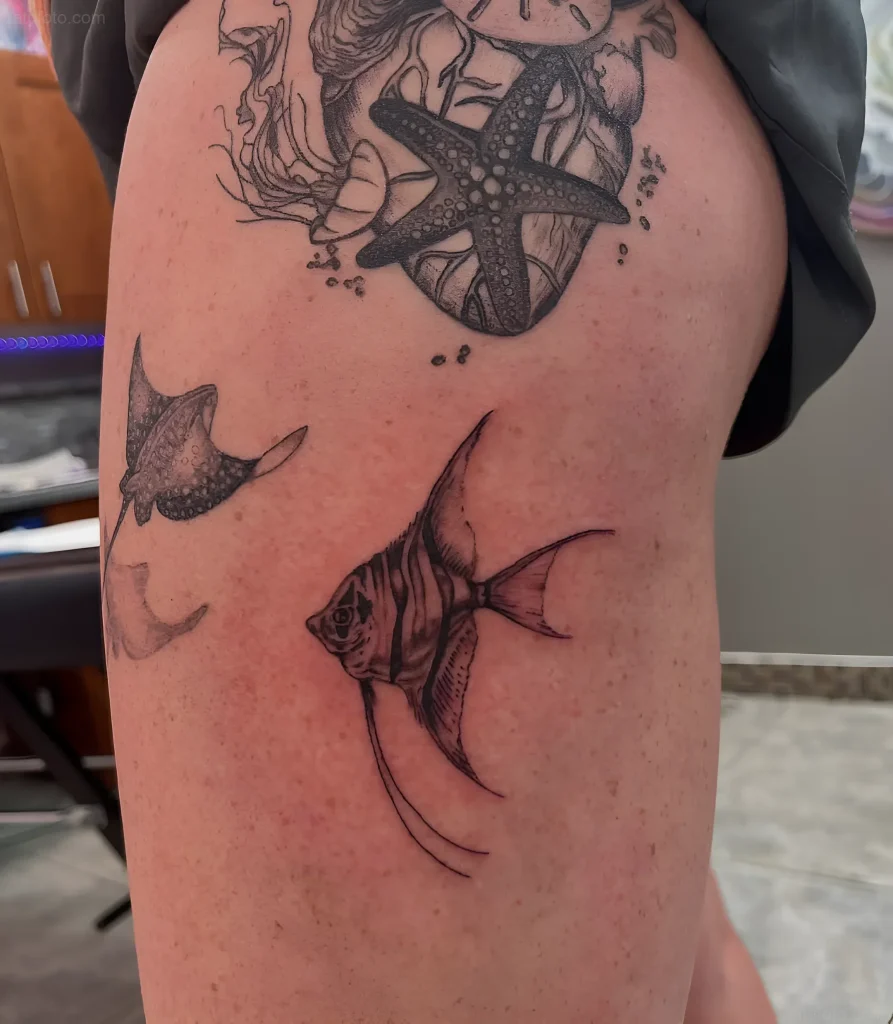
- Thigh (outer side): Allows for a large, detailed canvas. Often used for women’s tattoos where the emphasis is on fluidity and decorativeness.
Areas for Minimalist or Graphic Works
If a stylized (Linework, Dotwork) or minimalist design is chosen:
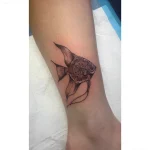
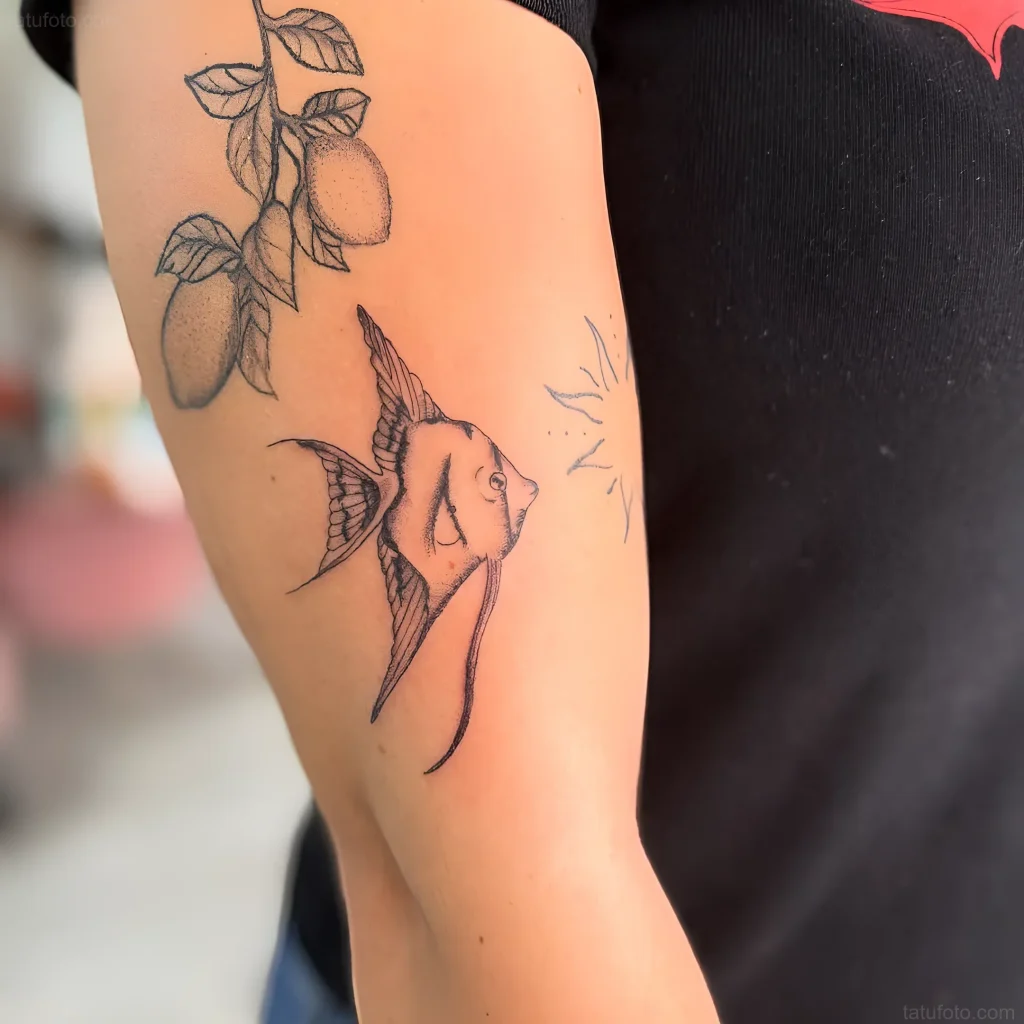
- Wrist or ankle: Suitable for small, symbolic images where the focus is on the triangular silhouette.
- Ribs: An intimate location that emphasizes the personal, hidden meaning of the symbol (harmony, tranquility). The vertical space here is also well-suited for the elongated shape of the Angelfish.
Composition Tips
To enhance the symbolism, consider the following compositional elements:
- Aquatic Flora: Adding aquatic plants (e.g., Vallisneria or Echinodorus) emphasizes the connection to the natural environment and enhances the motif of harmony and life.
- Symmetry and Reflection: Depicting an Angelfish reflecting in the water, or two fish forming a symmetrical pattern, reinforces the symbolism of balance and duality.
- Light Rays: Using light tones and highlights breaking through the water can symbolize enlightenment, hope, and spiritual rebirth.
Angelfish Tattoo Care: Healing and Brightness Preservation Tips
Angelfish tattoos, especially those done in Realism and Watercolor styles, often contain a lot of halftones, light pigments, and fine lines. Preserving their original brightness and clarity requires special attention during the healing stage and in the long term.
Healing Stage (First 2–4 Weeks)
Considering that Angelfish tattoos often use a lot of white and light shades (to convey highlights and transparency), it is crucial to protect these pigments from bacteria and mechanical damage:
- Water Protection: Although the fish itself lives in water, a fresh tattoo must be protected from prolonged contact with it. Avoid swimming pools, saunas, and hot baths for the first two weeks.
- Moisturization and Breathing: Use healing ointments recommended by your artist. Moderate moisturizing is critical to prevent the skin from cracking and “pulling out” pigment, especially in the fine color transitions of the fins.
- Clothing: Avoid tight clothing that can rub against the tattoo and wear away the top layer of pigment. Choose natural, breathable fabrics.
Long-Term Care and Color Preservation
The main enemy of a bright tattoo is ultraviolet radiation. Light and watercolor tones of the Angelfish fade faster than black outlines:
Sunscreen: This is not a recommendation but a strict rule. Always use SPF 50+ sunscreen when exposed to direct sunlight on the tattoo to preserve the richness of blue, yellow, and white shades.
Timely touch-ups: If your Angelfish is done in Realism with fine details, a small touch-up may be needed after 5–7 years to restore contrast and clarity to the fine lines of the fins.
Angelfish Tattoo: Frequently Asked Questions (FAQ)
Is an Angelfish Tattoo Exclusively a Female Choice?
Answer: Absolutely not. Although the Angelfish is associated with grace and elegance, its symbolism of harmony, balance, and aristocracy is universal. Men often choose graphic, black and white, or realistic depictions of Angelfish, emphasizing its perfect symmetry and tranquility. In male tattoos, the Angelfish often symbolizes inner strength that does not require aggressive expression.
How Does the Color of an Angelfish Affect Its Symbolism?
Answer: Color is of great importance:
- Black (Black Veil): Enhances the symbolism of mystery, mysticism, depth, and protection.
- Silver/Pearl: Emphasizes purity, spirituality, and connection to lunar energy.
- Marble/Koi: Symbolizes changeability, multifaceted personality, and adaptability.
Can Angelfish Be Combined with Other Aquatic Symbols?
Answer: Yes, this is a common practice. Angelfish pair well with aquatic plants (lotus, lily – symbols of purity), waves (movement, emotions), or air bubbles (lightness, life). It is important to avoid pairing them with aggressive marine predators to maintain their primary symbolism of calmness and grace.
Is an Angelfish Tattoo Suitable for a First Tattoo?
Answer: Yes, absolutely. The Angelfish is a positive, aesthetically pleasing, and non-confrontational symbol. If you choose detailed Realism or Watercolor, be prepared for the work to take several sessions and require a high level of skill from the artist.
Interesting Facts About Angelfish and Their Reflection in Tattoos
Understanding the biological and cultural characteristics of Angelfish can add unique layers of meaning to your tattoo, making it even more personal and profound.
1. The Name “Pterophyllum” and “Angel”
The Latin genus name Pterophyllum literally means “winged leaf” (Pteron – wing, Phyllon – leaf), which perfectly describes their shape. The English name Angelfish is given due to their majestic form and smooth movement. In tattoos, this enhances the symbolism of celestial grace, protection, and sublimity.
2. Vertical Stripes as Protection
Wild Angelfish (in the Amazon) have vertical stripes that help them camouflage among the vertical stems of aquatic plants. In tattoos, these stripes can symbolize secrecy, adaptability, and the ability to protect one’s boundaries. If the tattoo is done in Blackwork or Graphic style, contrasting stripes can emphasize the duality of nature.
3. Territoriality and Pair Bonding
Angelfish, despite their outward serenity, are territorial fish and often show aggression towards their own kind if they feel their territory or partner is threatened. This symbolic contradiction can be used to reflect a gentle appearance hiding a strong character and readiness to defend what is dear.
4. Selective Beauty
There are many artificially bred forms of Angelfish (marble, gold, smoke, veil). Choosing a specific form in a tattoo can be a hint at your uniqueness, love for art, or pursuit of self-improvement, as you are choosing beauty created by labor and selection.
An Angelfish tattoo is a choice for refinement and deep inner peace. It is not just an image of a fish, but a visual manifesto of harmony that you carry on your skin.