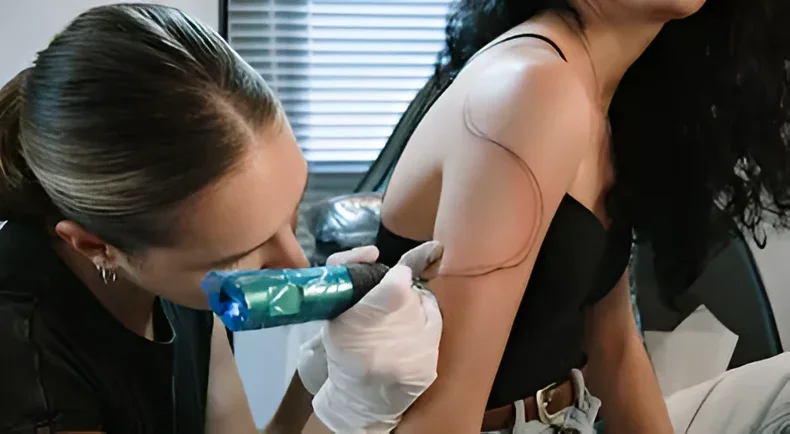
By 2026, tattoo culture has definitively moved beyond aesthetics and fashion trends. Today, a visit to a studio is not just a way to stand out, but a deep, almost ritualistic act of healing. Clients are increasingly opting for personal stories over generic designs from social media, where every stroke on the skin serves as a reminder of past pain, resilience, or remembrance of loved ones.
From Aesthetics to Meaning: A New Paradigm in the Tattoo Industry
For a long time, tattoos were discussed solely in terms of style: size, color, placement, or minimalist lines were debated. However, by the beginning of 2026, the situation in global and, in particular, Indian studios had fundamentally changed. Tattoos ceased to be an act of protest or a decorative element, transforming into a tool for wellness and self-expression, closely linked to processing grief, trauma, and the search for one’s own identity. This shift is not a fleeting trend; it is rooted in a deep human need to anchor one’s reality in an unstable world.
Psychologist Akanksha Tayal notes that the key factor here is the “sense of permanence.” In psychology, the unchanging nature of a body tattoo acts as an anchor. In moments when memory fails, and words cannot express the depth of experiences, the body continues to “remember,” and the tattoo becomes a physical embodiment of this memory, helping a person stay connected to themselves.
Numbers and Facts: Statistics of Conscious Choice
Data from major studios confirms this cultural shift. Sunny Bhanushali, founder of the Aliens Tattoo chain, shared impressive statistics reflecting the growth of the therapeutic approach to ink:
- In 2024, 624 cases of tattoos with a clear emotional subtext were recorded.
- In 2025, this number rose to 908 works, demonstrating a steady dynamic.
According to Bhanushali, modern consultations begin not with discussing the composition, but with the client sharing why the tattoo is emotionally important to them. The design now follows the meaning, not the other way around, marking a definitive departure from tattoos as purely visual art.
Tattoo as a Way to Overcome Trauma
For individuals who have experienced violence or severe childhood trauma, the tattooing process can be dualistic. Akanksha Tayal emphasizes the importance of distinguishing between an impulsive desire to “punish” one’s body through pain and a conscious choice in the healing phase. While at the beginning of the journey, a tattoo might be an expression of anger, through long psychological work, it transforms into a “badge of honor” and a symbol of victory over circumstances.
Tattoos help combat the so-called “imposter syndrome” in the context of mental health. When others devalue a person’s feelings, saying their pain is “not real,” a permanent design on the skin serves as irrefutable proof of the reality of their experience. This helps overcome the shame that society often imposes on those who do not fit the framework of “normal” hardship coping.
Symbolism of Survival: From Semicolons to Memorial Portraits
A whole language of mental health symbols has emerged in modern tattoo culture. The most famous example is the semicolon (;), which has become an international sign for those who have survived a suicide attempt or are battling depression. This symbol allows one to declare their strength without engaging in long and painful explanations.
Furthermore, tattoos are becoming an important way to process personal loss. Lata Maheshwari from Delhi got a large depiction of her deceased pets to “always carry them with her.” Smita Dixit from Mumbai chose a drawing of her late friend as her design. For them, tattoos are a bridge between the past and the present, allowing love and pain to coexist in everyday life.
Why Does It Work?
From a tattoo anthropology perspective, we are witnessing a return to origins. Ancient communities used tattoos as markers of life stages and initiations. In the modern world, where traditional support institutions often fall short, tattoo studios are taking on the role of safe spaces for transformation. The pain of getting a tattoo contributes to the release of endorphins, which, combined with a clear psychological intention, creates a powerful cathartic effect. A tattoo doesn’t just “sit” on the skin; it integrates into the psyche, helping a person regain wholeness after trauma has fractured their life into a “before” and “after.”