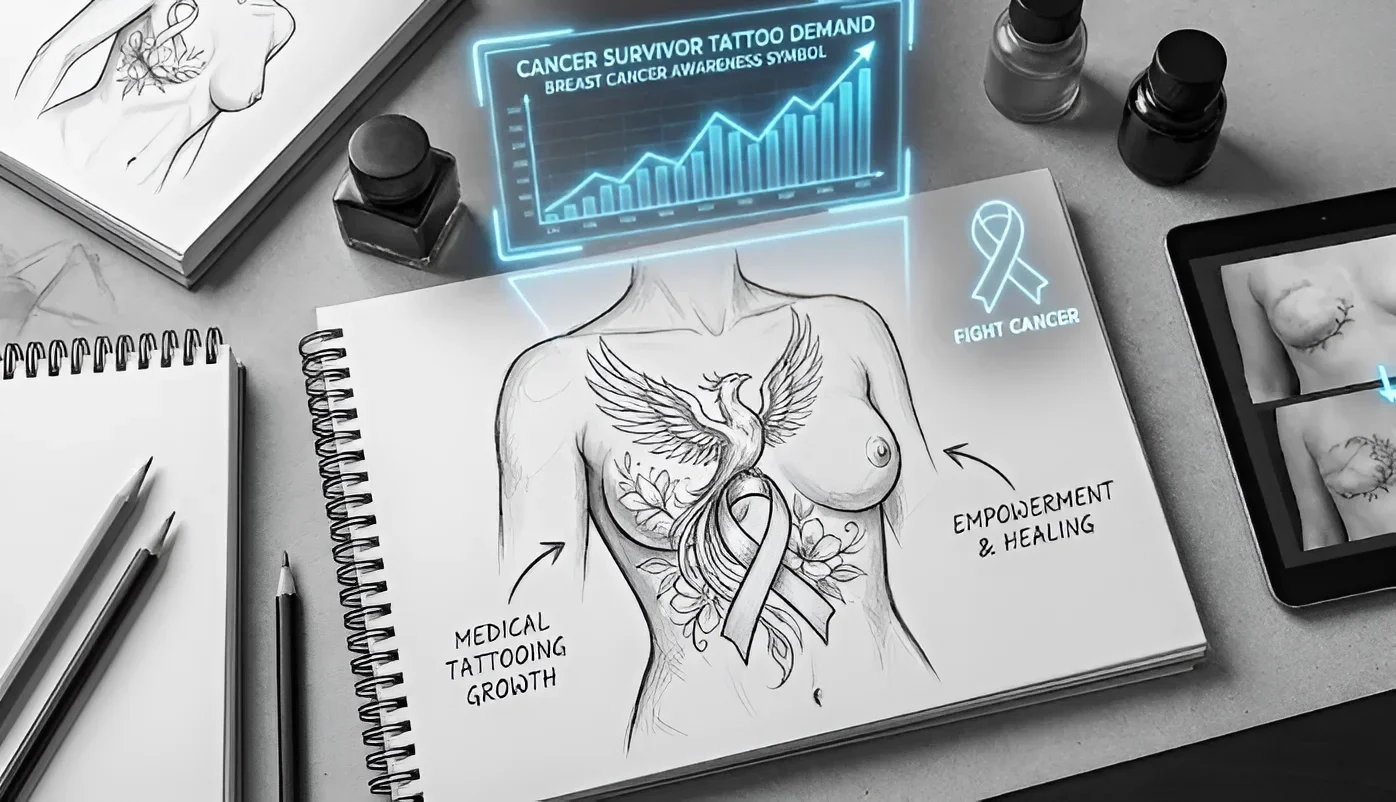
The modern tattoo industry has long gone beyond purely decorative art, transforming into a powerful tool for social communication and psychological rehabilitation. One of the most noticeable and profound trends in recent years has been the rapid growth in popularity of tattoos dedicated to the fight against breast cancer. For many, it’s not just a drawing, but a way to declare their strength, rethink traumatic experiences, and regain control over their own bodies.
The Aesthetics of Healing: A New Look at Medical Tattooing
In professional circles, the segment of tattoos related to oncology is increasingly referred to as “therapeutic art.” This direction combines purely symbolic imagery with complex technical work on scar coverage or reconstructive dermopigmentation. According to the latest market research, the female segment of the tattoo service market is showing stable expansion and qualitative growth. It is projected that by 2026, the share of women among consumers of tattoo salon services will reach an impressive 55.57%. Women increasingly view tattoos as an investment in their own confidence, preferring premium services and highly artistic works.
Global Context and WHO Statistics
The relevance of the topic is confirmed by the dry and alarming figures of official statistics. According to the World Health Organization (WHO), about 2.3 million cases of breast cancer were diagnosed worldwide in 2020. The disease claimed the lives of 685,000 women. These figures make the problem one of the most significant in modern medicine. The growth of global awareness about the disease is directly reflected in the body art industry. A particular surge in activity from artists and clients is traditionally recorded in October – the international month of breast cancer awareness. It is during this period that the “pink ribbon” and other thematic patterns become the most sought-after designs in studios worldwide.
Transforming Pain into Art: Expert Analysis
From the perspective of tattoo culture, we are observing a unique process of destigmatizing the disease. If previously the traces of surgical intervention were tried to be hidden under clothing, today they are chosen to be “decorated,” turning them into art objects. Experts from the portal tatufoto.com highlight three main vectors of development in this area:
- Symbolic Manifesto: classic images of pink ribbons, phoenixes, warrior women, or concise inscriptions like “Survivor,” which serve as an internal anchor and a reminder of victory.
- Artistic Camouflage: the use of complex floral or ornamental compositions to cover post-mastectomy scars. This requires the artist to have special skills in working with altered skin structure.
- Reconstructive Tattooing: the creation of a hyperrealistic image of a nipple-areola complex (3D tattoo). This direction is at the intersection of medicine and art, allowing women to restore the visual integrity of their bodies without additional plastic surgery.
Market Prospects and Social Role
The growing demand for such services stimulates the professional community to develop. Specialized courses for artists working with oncology patients are emerging, and new types of pigments are being developed that adhere better to scar tissue. Below is a table showing the dynamics and key influencing factors in this market segment.
| Influencing Factor | Industry Significance |
|---|---|
| Projected share of women in the market (2026) | 55.57% – dominant segment |
| Key demand period | October (Pink October) |
| Type of in-demand services | Premium artistic tattooing, scar coverage |
| Primary motivation | Psychological rehabilitation, beautification |
In conclusion, tattooing in the context of the fight against breast cancer is no longer just a trend. It is an important part of modern culture that helps people cope with the consequences of severe trials. The industry is becoming more sensitive and inclusive, offering not just a “picture,” but a deep therapeutic effect that restores a person’s sense of beauty and harmony with their own body. In the coming years, we will see further professionalization of this direction and an increase in its significance in the overall structure of aesthetic services.