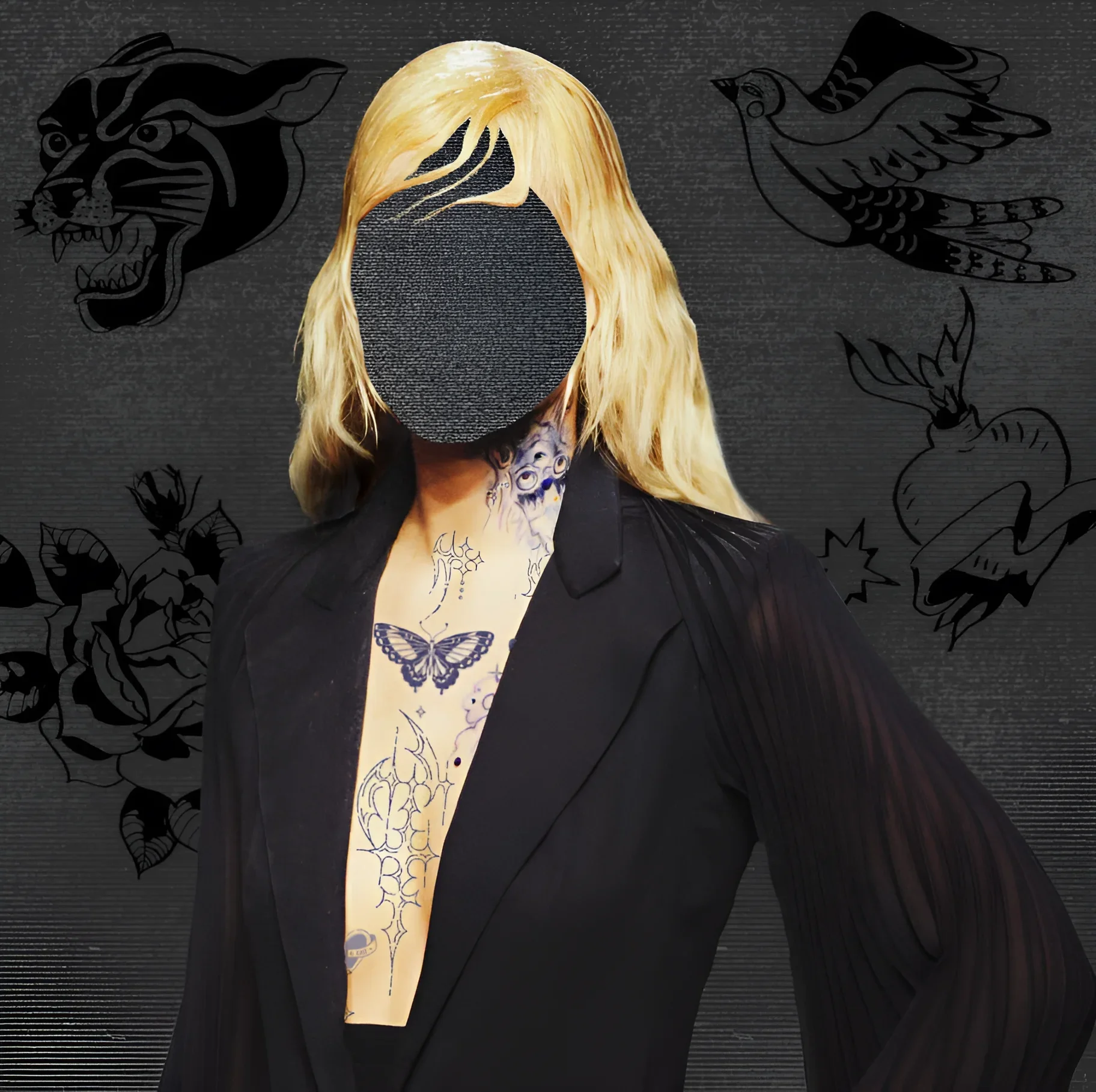
In August 2026, a discussion erupted on social media surrounding a seemingly astonishing phenomenon: tattoos could serve as a shield against deepfakes. Viral videos promised that an abundance of ink on the body would hinder generative artificial intelligence algorithms from creating a realistic copy of a person. However, as it turned out, this protection is merely a temporary lull before the storm of technological progress.
Why Did Tattoos Become a “Shield”?
In a world where the lines between reality and digital art are blurring, the idea that a tattoo can save you from digital cloning seems appealing. Many internet users, especially fans of tattoo culture, enthusiastically embraced this news. The creator of one of the viral videos, named Ren, claims: “The more tattoos you have, the less plausible a fake of your image will be, as algorithms cannot accurately reproduce every element in every frame.”
This theory has some basis. Modern generative AI models indeed struggle with detail. As Hany Farid, a professor of computer science at Dartmouth College and an expert in digital forensics, notes, AI performs better with simple visual imagery, while complex details – whether tattoos or patterns on clothing – are often distorted. This is because the training datasets for people with tattoos are significantly smaller: only 22% of the US population has more than one tattoo, limiting the algorithms’ learning capabilities.
Expert View: Why This is a Temporary Phenomenon
Despite the apparent logic, experts warn against viewing tattoos as reliable protection. Hany Farid emphasizes: “Today it works, but tomorrow it won’t.” Technologies are developing rapidly. Recall the video of Will Smith eating spaghetti, which in 2023 looked like a nightmarish montage, but two years later became almost indistinguishable from reality. This was made possible by improvements in temporal coherence – the AI’s ability to maintain visual consistency between frames.
Currently, generated videos are limited in duration – about 10–15 seconds. In such short segments, tattoos might “shimmer” or distort, but in longer videos composed of many short clips, these artifacts become less noticeable. Saetbyeol Leeyouk, a researcher at MIT Media Lab specializing in AI ethics, adds: “Ultimately, the tattoo problem will be solved.”
Why Tattoos Won’t Protect Against Malicious Use
Even if tattoos create visual interference, they do not protect against the most crucial aspect – the malicious use of an image. Saetbyeol Leeyouk points out an important aspect: the goal of deepfakes, especially in the context of non-consensual sexual abuse, is not perfect accuracy, but the humiliation of the victim. Even if AI cannot perfectly reproduce the shading on your neo-traditional snake, it won’t stop those who want to cause harm.
What Can Truly Protect You?
Hany Farid, living on 100 acres of forest in Vermont, offers a radical solution: “Build a bunker and disconnect from the grid.” Five years ago, creating a deepfake required thousands of images and hours of voice recordings. Today, one photo and ten seconds of voice are enough. Even if you don’t lead an active online life, someone with Meta Glasses can film you on the street and use the material for generation.
Saetbyeol Leeyouk urges against seeking individual protection methods and instead calls for action from politicians and developers. “We need to make them take responsibility, not look for ways for everyone to hide,” she says.
Is There Reason for Optimism?
Yes, but not in tattoos. Saetbyeol Leeyouk notes that as generative models advance, so do detection tools. “If detection methods improve, it means we will be able to more easily distinguish AI content from real victims,” she says. This offers hope that society can adapt to new challenges.
Conclusion: Tattoos are Style, Not Protection
Hany Farid summarizes: “Tattoos are not a salvation from AI dominion.” But those who have already gotten tattoos will at least look cool in the era of singularity. Tattoos remain an act of self-definition, a way to express oneself, but one should not rely on them as a technological shield. In a world where AI develops faster than we can react, the only true protection is awareness and collective action.
Table: Comparison of AI Capabilities in 2023 and 2026
| Parameter | 2023 | 2026 |
|---|---|---|
| Video Duration | Up to 5 seconds | 10–15 seconds |
| Detail Quality | Low, many artifacts | High, minimal distortions |
| Data Requirements | Thousands of images | One photo + 10 seconds of voice |
| Temporal Coherence | Absent | Present |
In conclusion: tattoos are art, self-expression, and part of culture, but not protection from technology. In an era where AI is becoming increasingly sophisticated, it is important to understand your limitations and not rely on myths. Be careful, be aware – and let your tattoos remain a symbol of your individuality, not an illusion of safety.