
The modern tattoo industry is rapidly moving beyond pure art, transforming into a high-tech sector of wearable electronics. Conductive inks and flexible microchips are replacing traditional pigments, inevitably attracting the attention of global regulators. On January 20, 2026, the European Commission took a decisive step in this direction, publishing a proposal for a comprehensive revision of the Cybersecurity Act. This document directly affects the developing market of “smart” and electronic tattoos, establishing strict requirements for the protection of supply chains in the information and communication technology (ICT) sector. For the tattoo community, this means a transition from an era of free creativity to strict adherence to digital security standards.
Quieter Than Water: How 2026’s Silent Tattoo Machines Are Changing the Game

The modern tattoo industry is undergoing a tectonic shift, moving away from the aesthetic of “garage” noise towards high-tech comfort and medical precision. If just ten years ago the buzz of an induction machine was an integral attribute of any self-respecting studio, today silence is becoming a sign of professionalism and care for the client. The emergence of new-generation wireless devices on the market, such as the Ninja Nova 2026, marks the final victory of ergonomics over tradition. These devices don’t just make the artist’s work more convenient – they fundamentally change the physiological and psychological experience of the tattooing process.
Freedom of Speech and Chemistry: How Global Laws Will Change the Tattoo Industry by 2026

The global tattoo industry is entering an era of strict legal transformation, where the fight to be recognized as a legitimate art form is moving from studios to courtrooms and the offices of Eurocrats. On January 21st, legal giant Steptoe, in conjunction with the American Civil Liberties Union (ACLU), initiated a high-profile lawsuit against the WMATA transport system, challenging discriminatory advertising restrictions. Although the lawsuit formally concerns freedom of speech on public transport, this event holds sacred meaning for the tattoo community: it sets a precedent that will allow tattoo parlors and body modification artists to advertise their services on par with hairdressers or art galleries, moving out of the “gray zone” of public perception.
The Evolution of Aesthetics: How Cosmetic Tattooing is Changing the Modern Beauty Industry

Modern tattoo culture is undergoing a large-scale transformation, where the line between classic body art and aesthetic cosmetology is becoming increasingly transparent. According to the latest analytical forecasts, the cosmetic tattooing segment demonstrates the highest compound annual growth rate (CAGR) in the industry. If tattoos were once perceived solely as a means of self-expression through symbols and images, today they have become a powerful tool in the beauty industry, allowing for long-term appearance correction. Experts note that technological breakthroughs in pigment application methods and dye compositions are opening new horizons for innovations that will dominate the market in the coming years.
The Asian Vector: How the East is Dictating Tattoo Trends Worldwide
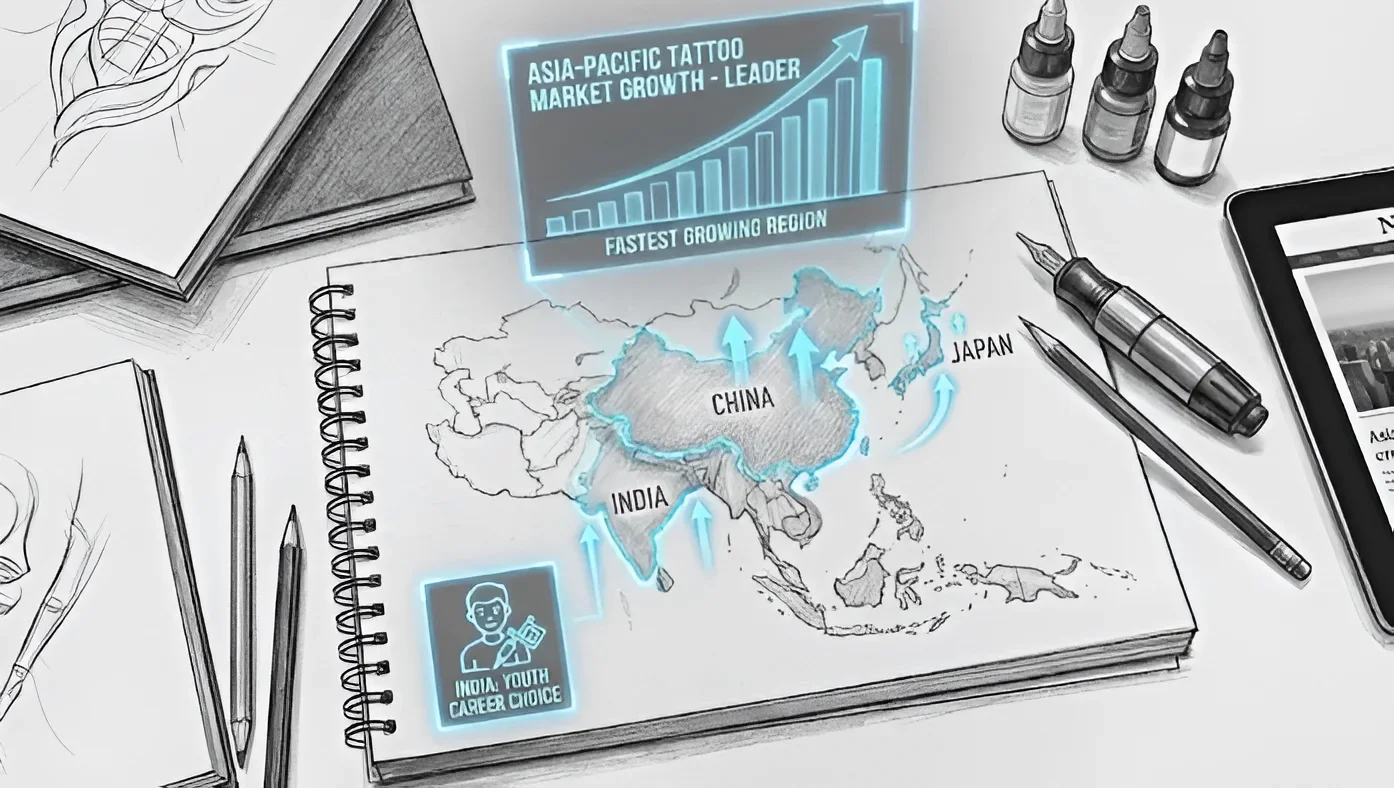
The global tattoo culture map is undergoing fundamental changes, shifting the focus from traditional Western markets to the dynamically developing Asia-Pacific region. Today, it is Asian countries that are demonstrating the highest growth rates, becoming the locomotive of the entire industry for the next decade. According to the latest analytical data, China, India, and Japan are not just adapting Western trends but are also forming their own unique ecosystem where ancient traditions, modern technologies, and radical changes in the social perception of body art intertwine.